November 2026 Militaria and Political Auction · Lot 552
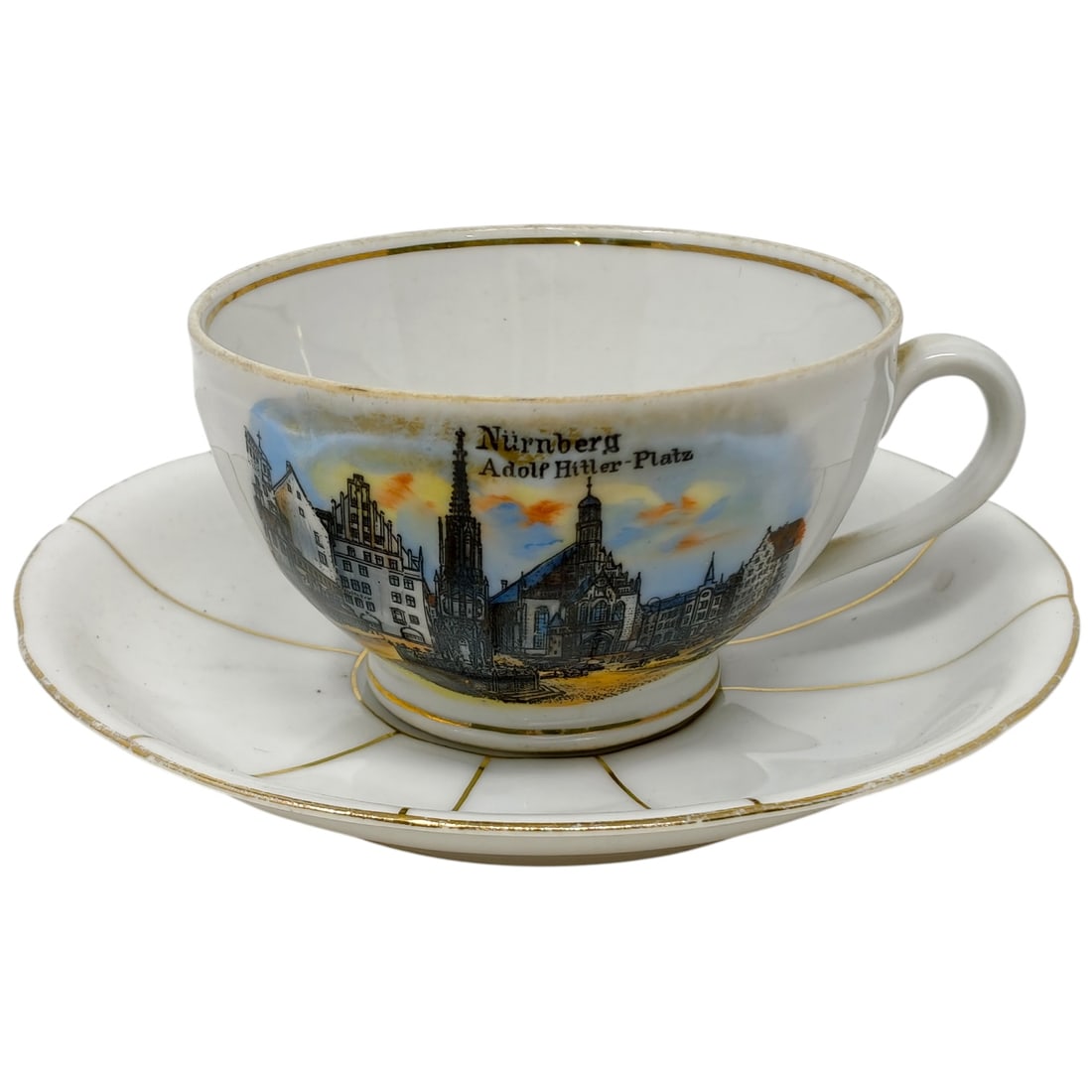
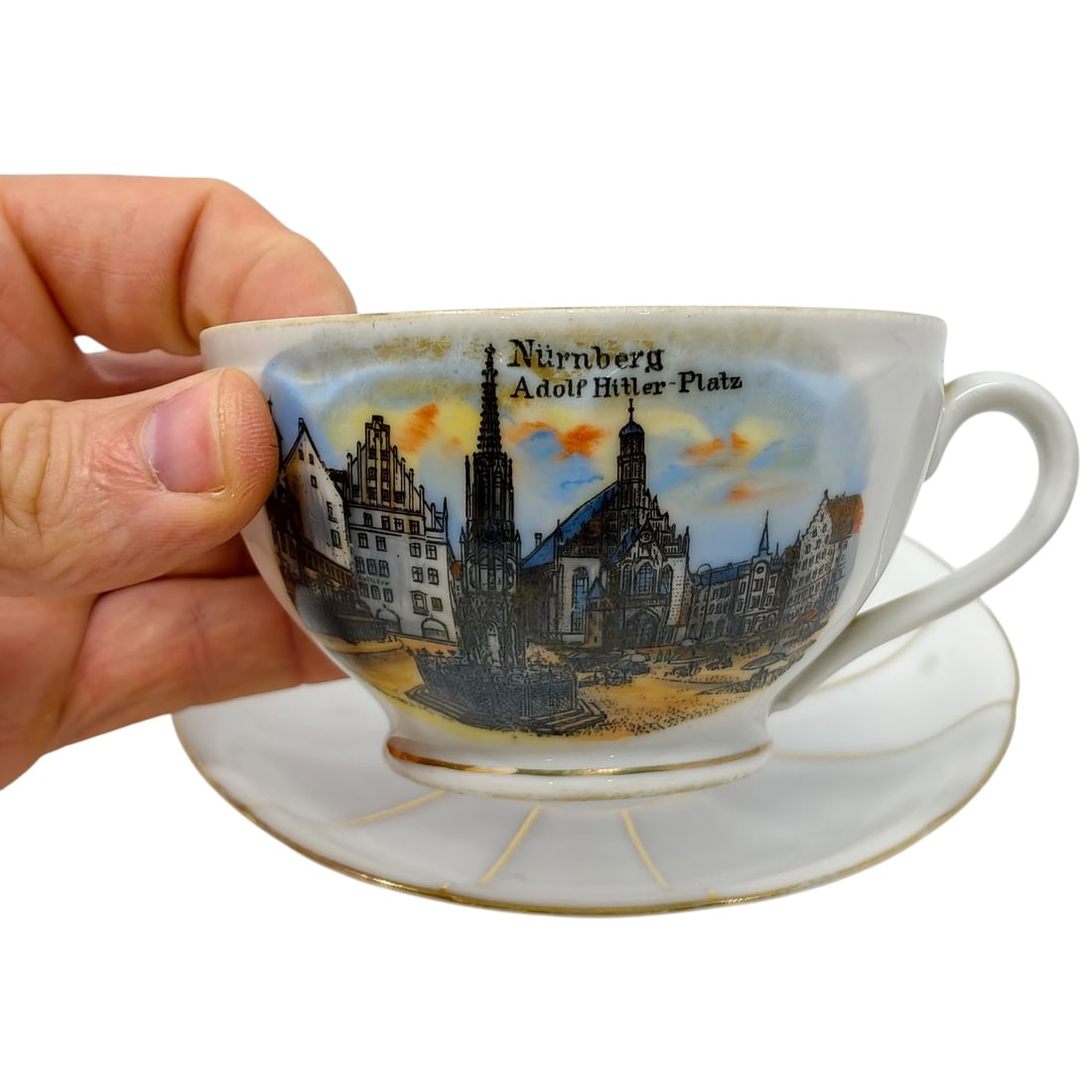
German 1930s Porcelain Souvenir Cup and Saucer - Nuernberg Adolf Hitler-Platz
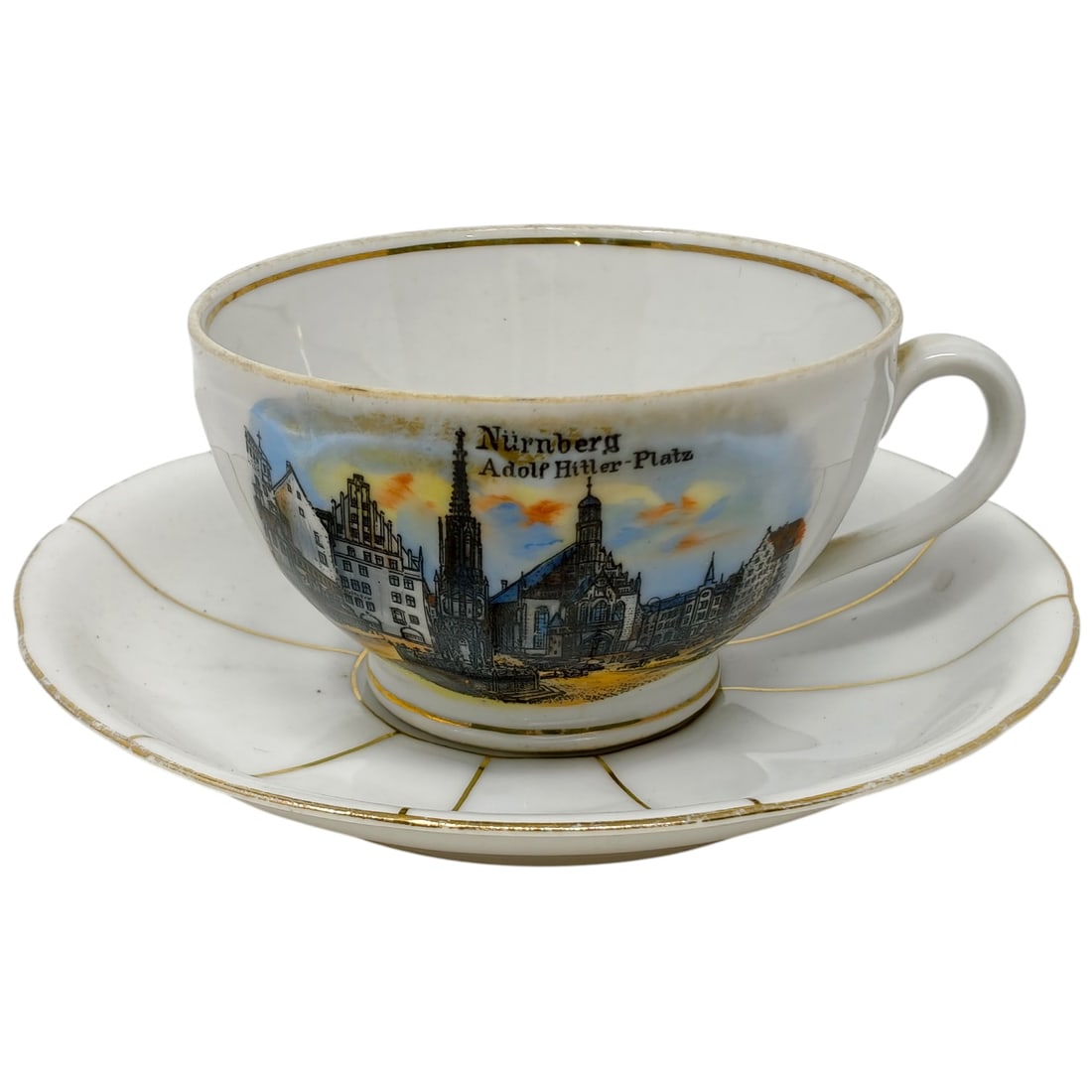
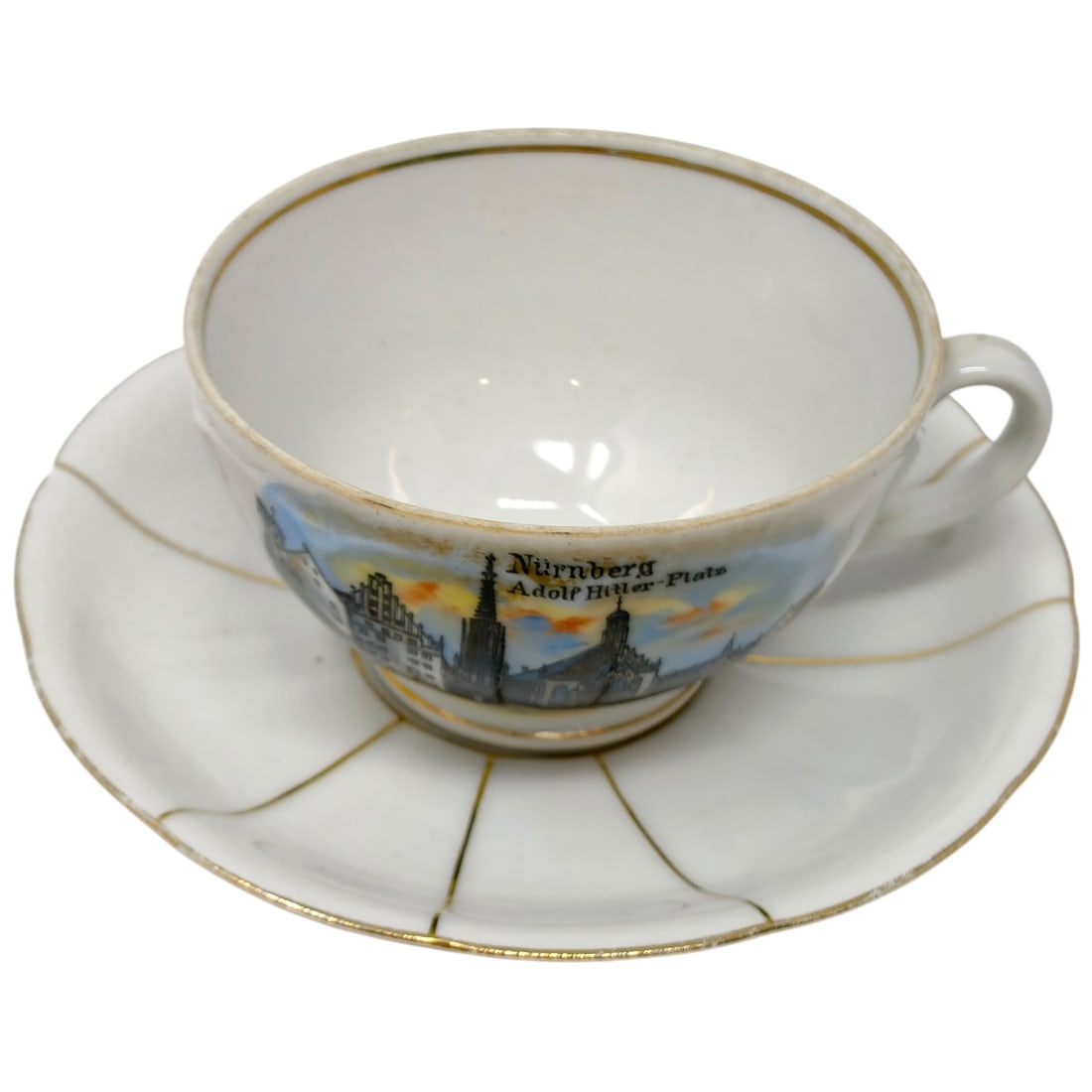
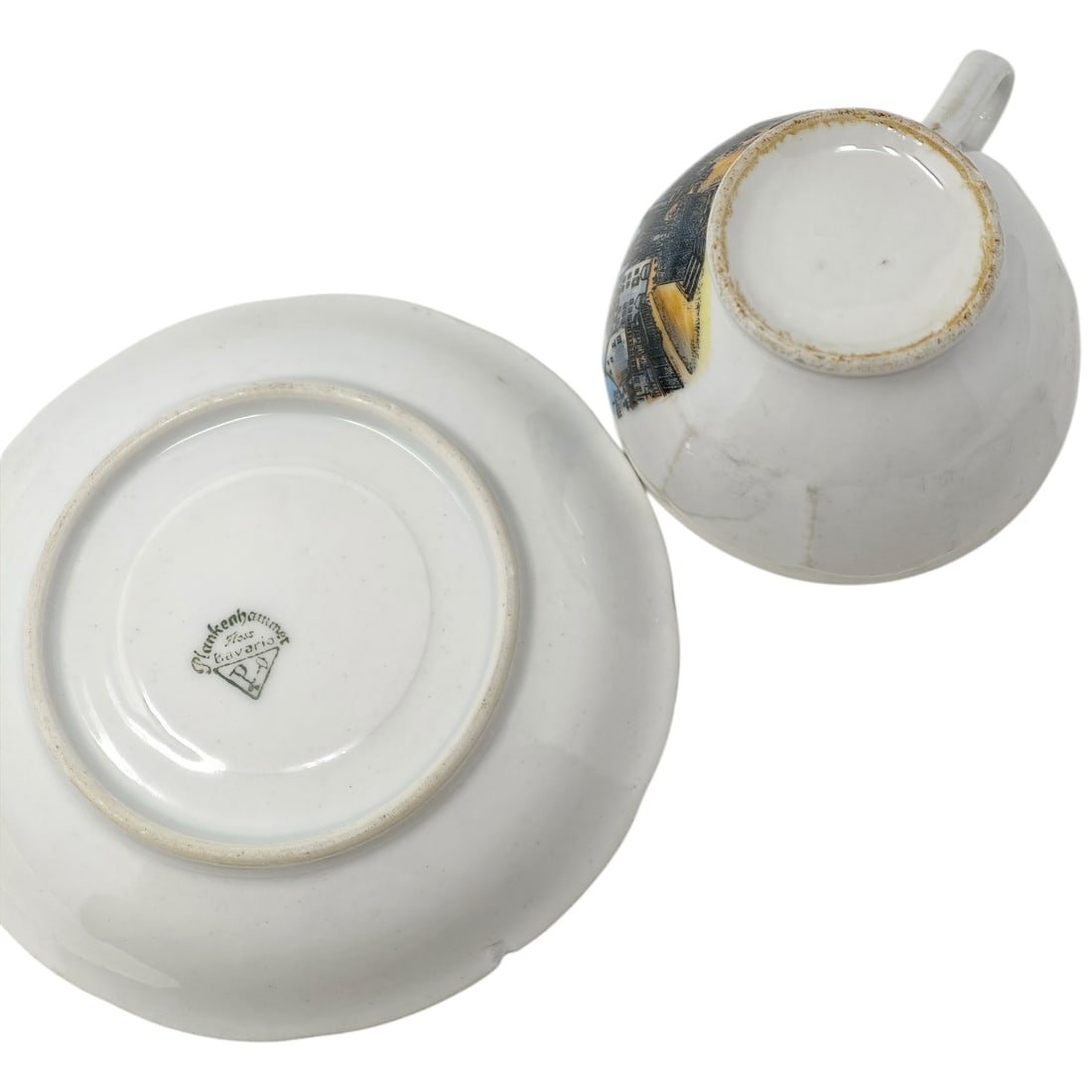
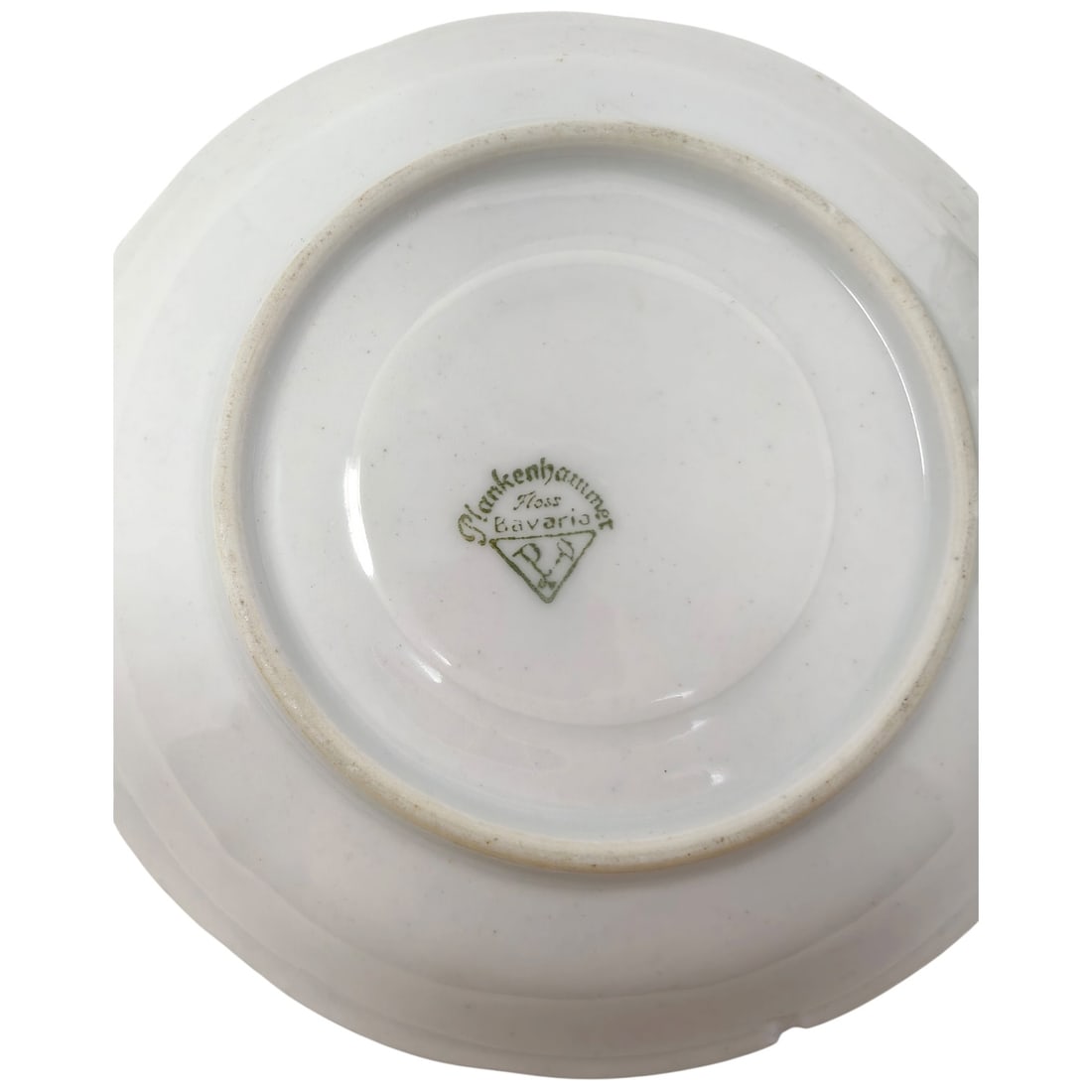
A porcelain teacup and matching saucer decorated with a hand-colored transfer view of Nuernberg's town square, captioned 'Nuernberg Adolf Hitler-Platz'. The scene depicts period townhouses and a church spire under a stylized sky, with gilt rim banding on both cup and saucer. This type of souvenir porcelain was produced commercially in Germany during the 1930s, reflecting the renaming of the square during that era. No maker's mark is visible in the photos provided.
The renaming of civic squares and streets after Adolf Hitler and other Nazi figures was a widespread practice in German towns and cities during the 1930s, part of the broader effort to embed the regime's personality cult into everyday public life. Nuernberg held particular symbolic importance for the Nazi Party as the site of its annual Reichsparteitag (Party Rally) from 1927 onward, making the city a natural focus for such commemorative renamings and associated commercial souvenir production. Tourist and souvenir items depicting these renamed locations were commonly sold to visitors and rally attendees, functioning both as keepsakes and as everyday propaganda normalising the new political landscape. Such square and street names were reversed after 1945 during the Allied de-Nazification of German public spaces.
Nuernberg's Hauptmarkt and surrounding civic spaces were prominent sites within the city long before their renaming reflected Nazi-era political priorities, as Nuernberg served as the designated site of the NSDAP's annual Reichsparteitag from 1927 onward, drawing large numbers of party members and visitors each year. The renaming of the square after Adolf Hitler exemplifies the widespread 1930s practice of embedding the regime's personality cult into German civic geography, with such locations becoming focal points for tourism and commercial souvenir production aimed at rally attendees and visitors. Items such as this teacup and saucer reflect that everyday commercial culture, in which mundane tourist wares doubled as vehicles for normalising the new political order. Such renamed squares and streets were restored to their earlier or new designations after 1945 as part of Allied de-Nazification efforts.
Catalogued for November 2026 Militaria and Political Auction. This lot is not for sale on this site. Ask us about similar pieces