November 2026 Militaria and Political Auction · Lot 1090
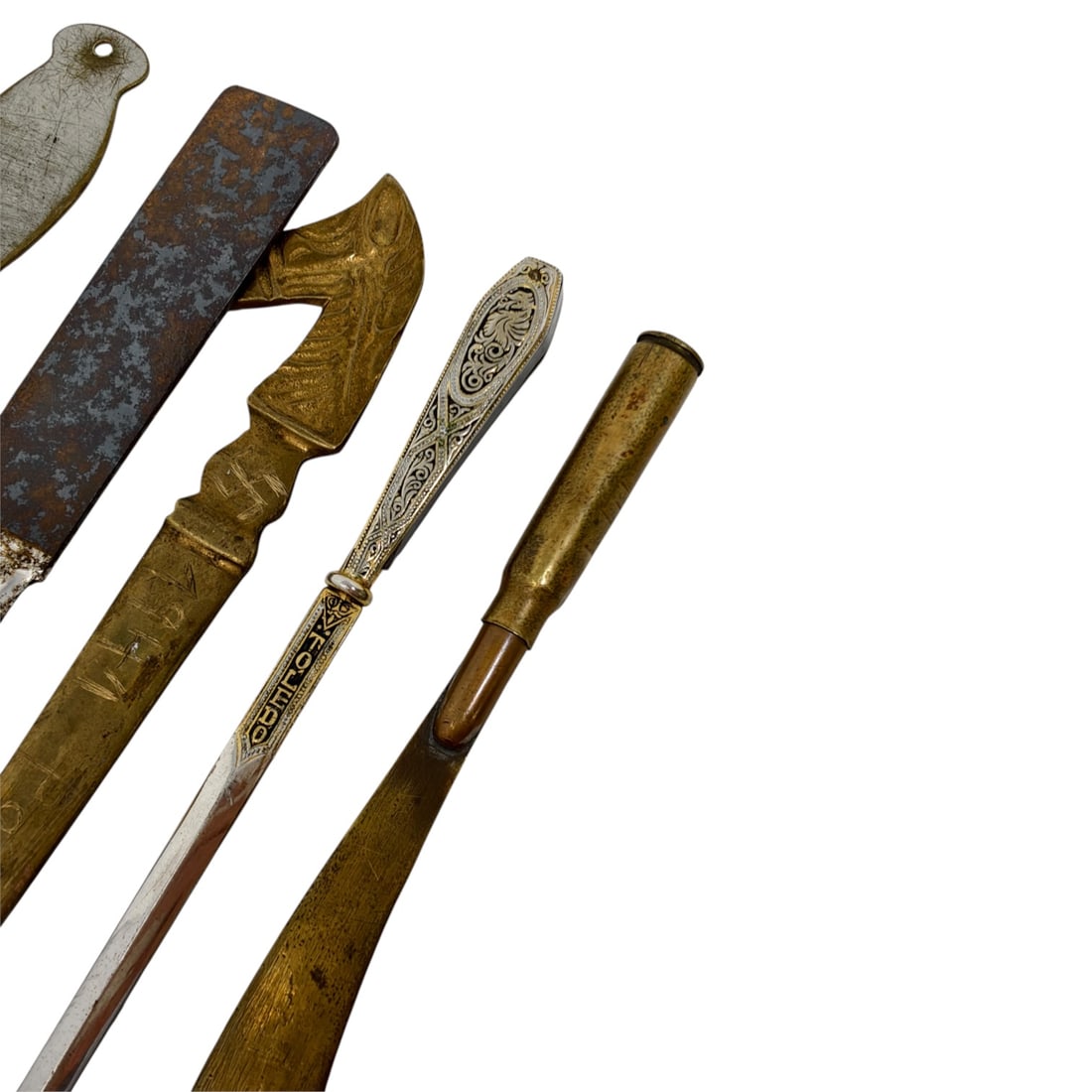
Set of Continental Letter Openers and Souvenir Blades, including a Swastika-Motif Example
- Price realized
- $100
- hammer, buyer's premium excluded · November 2026 Militaria and Political Auction
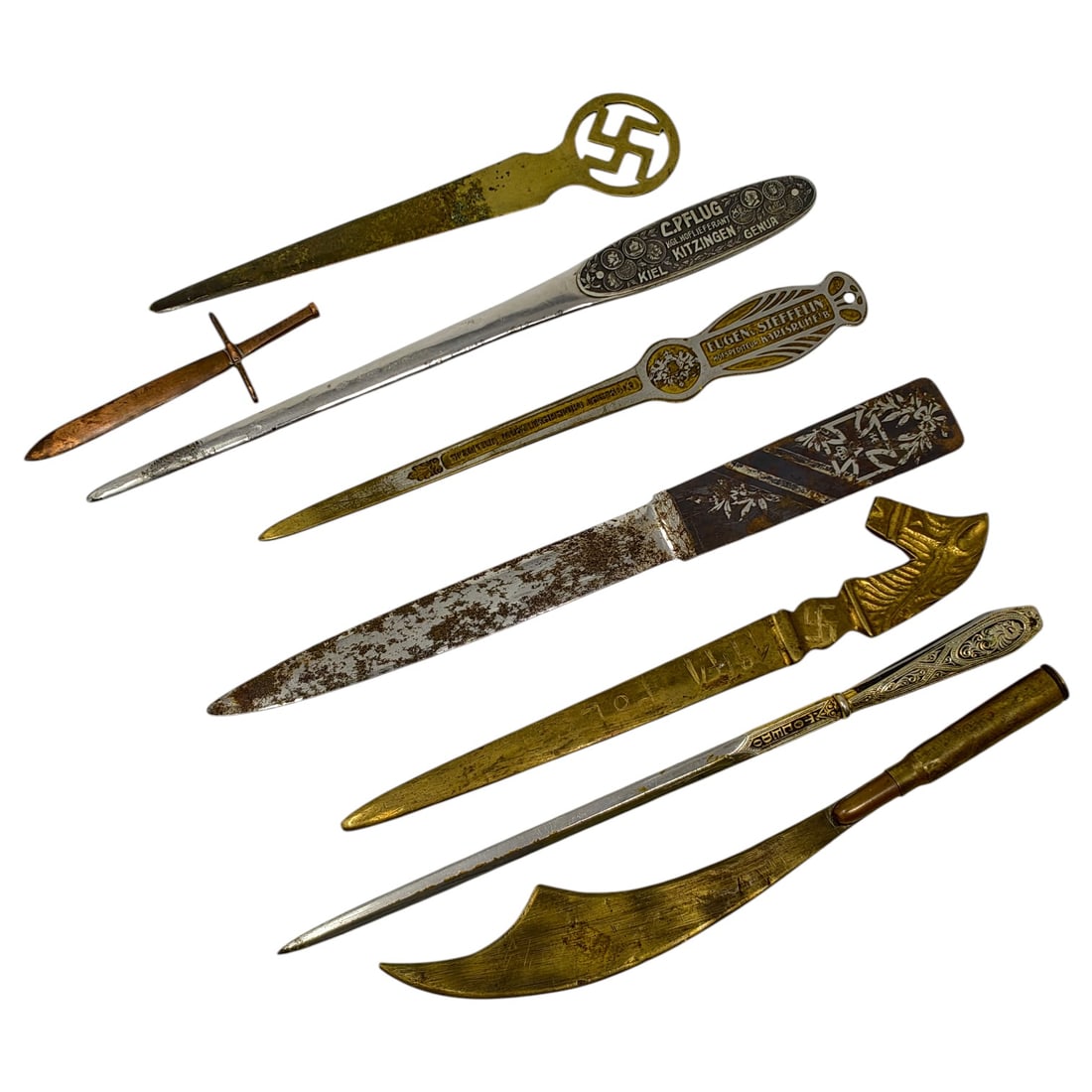
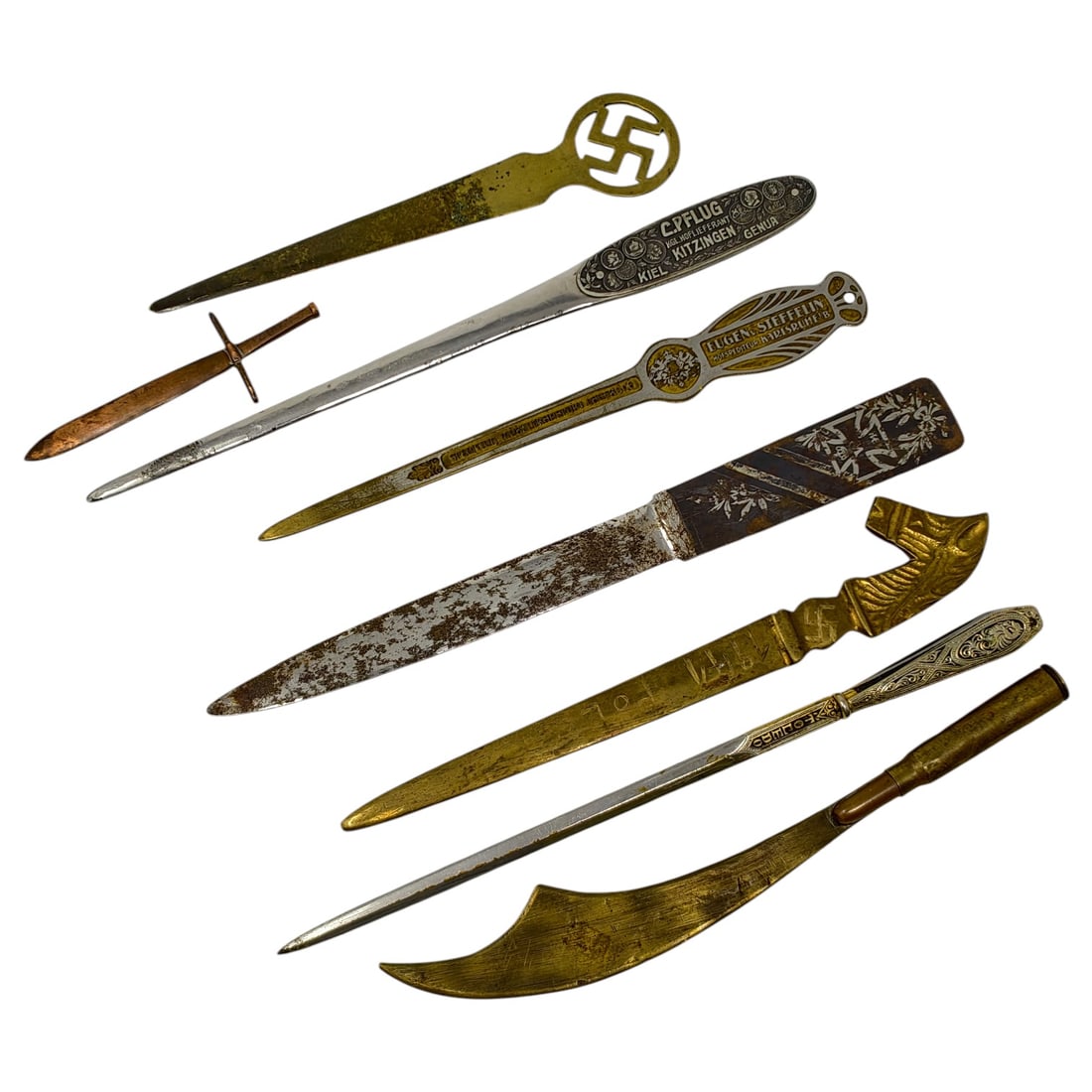
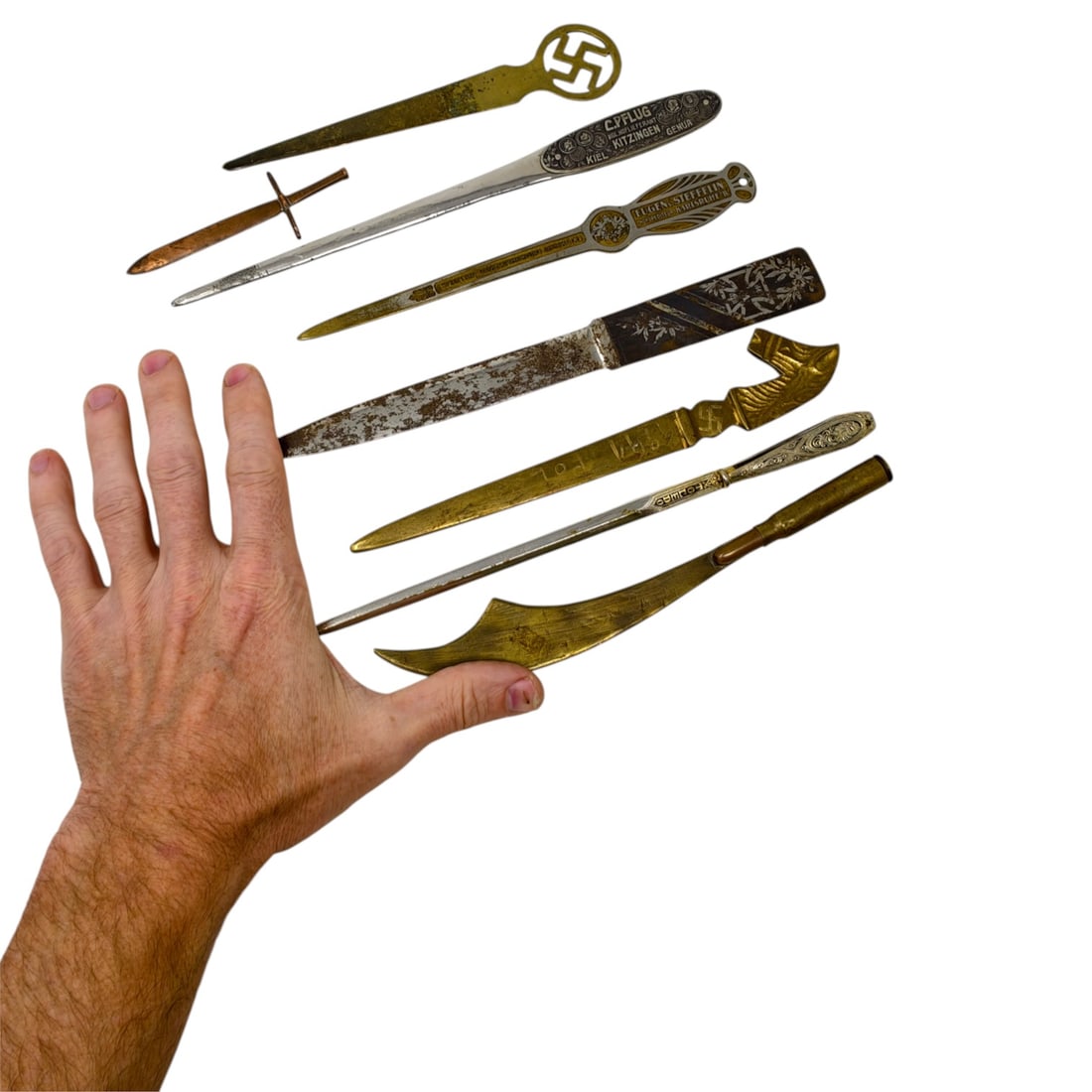
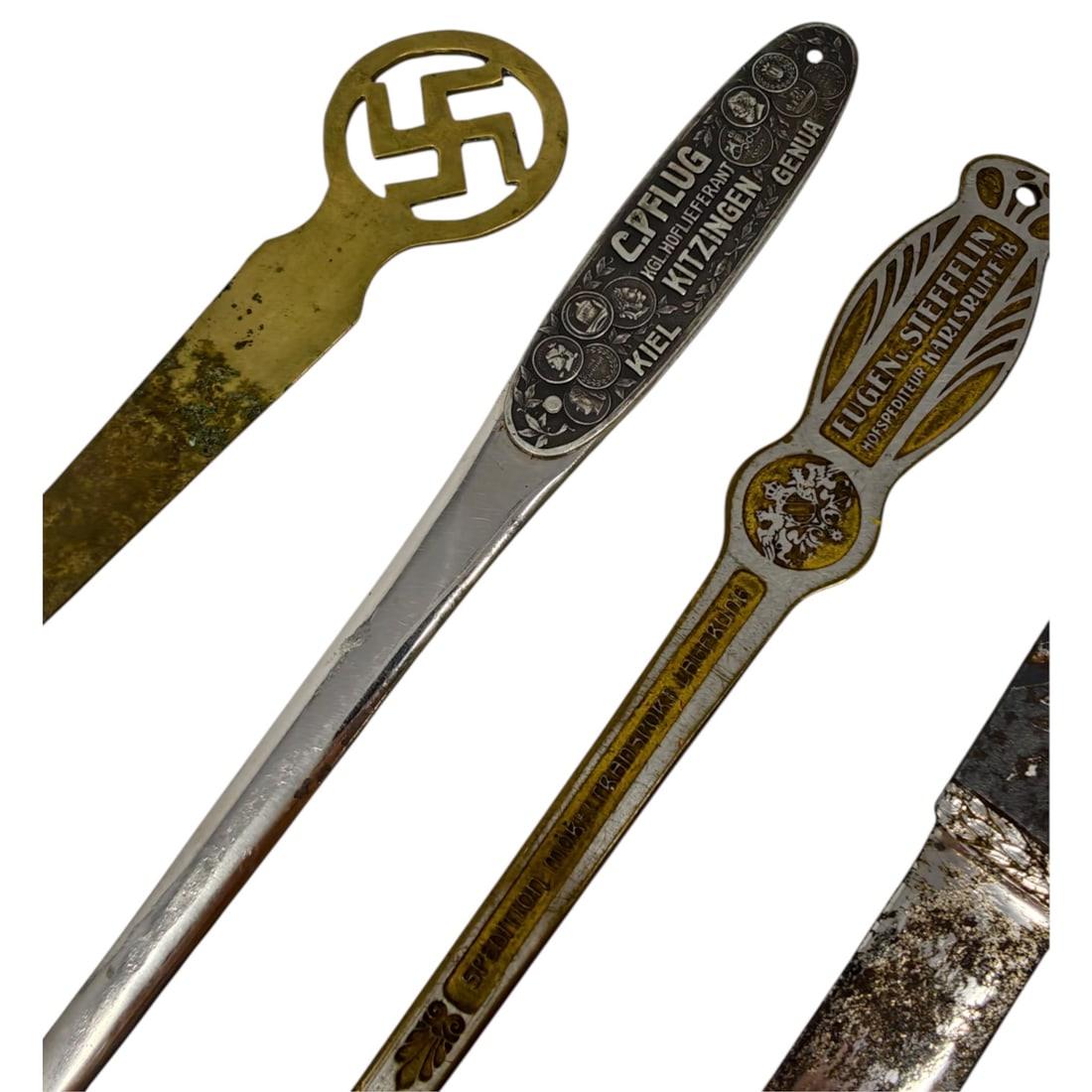
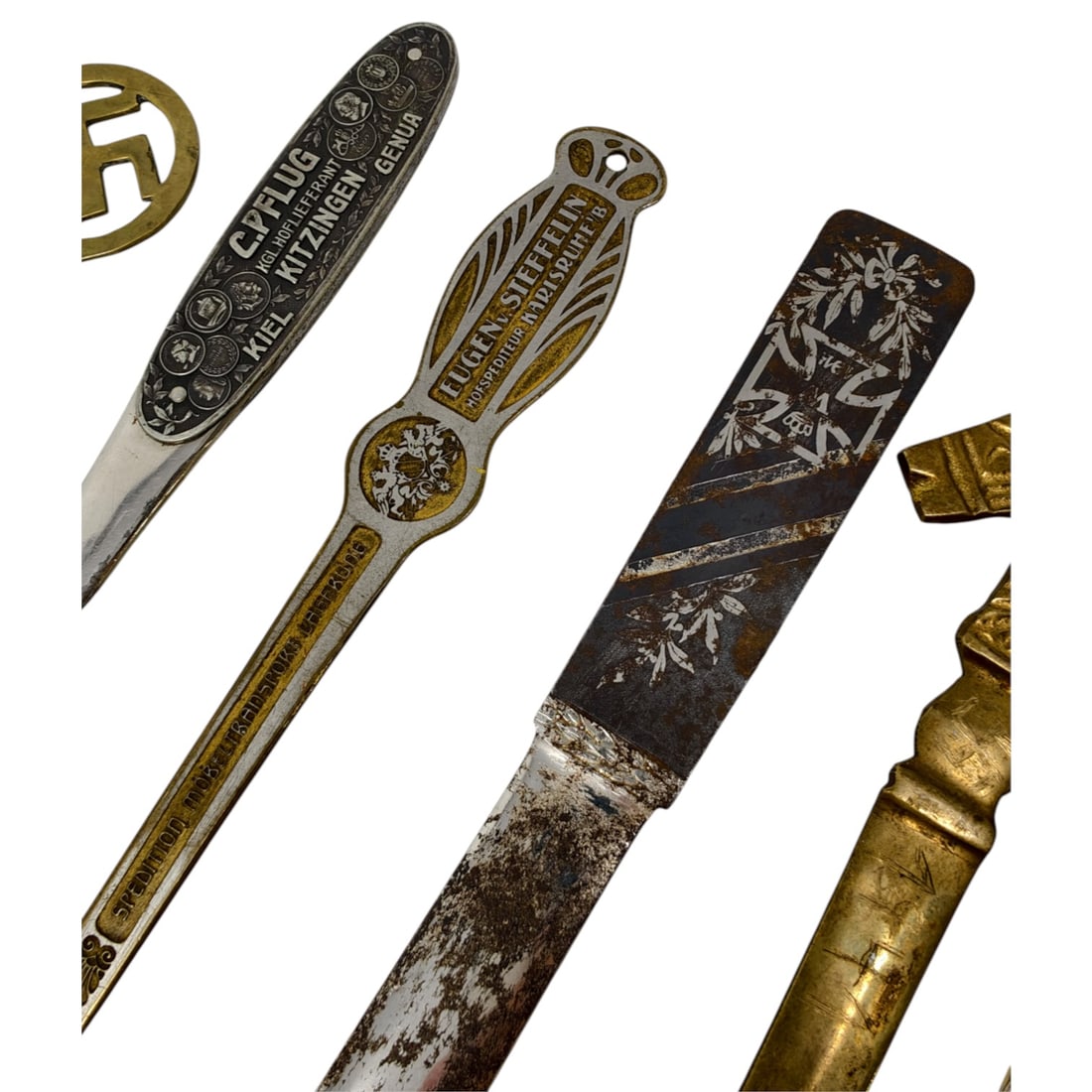
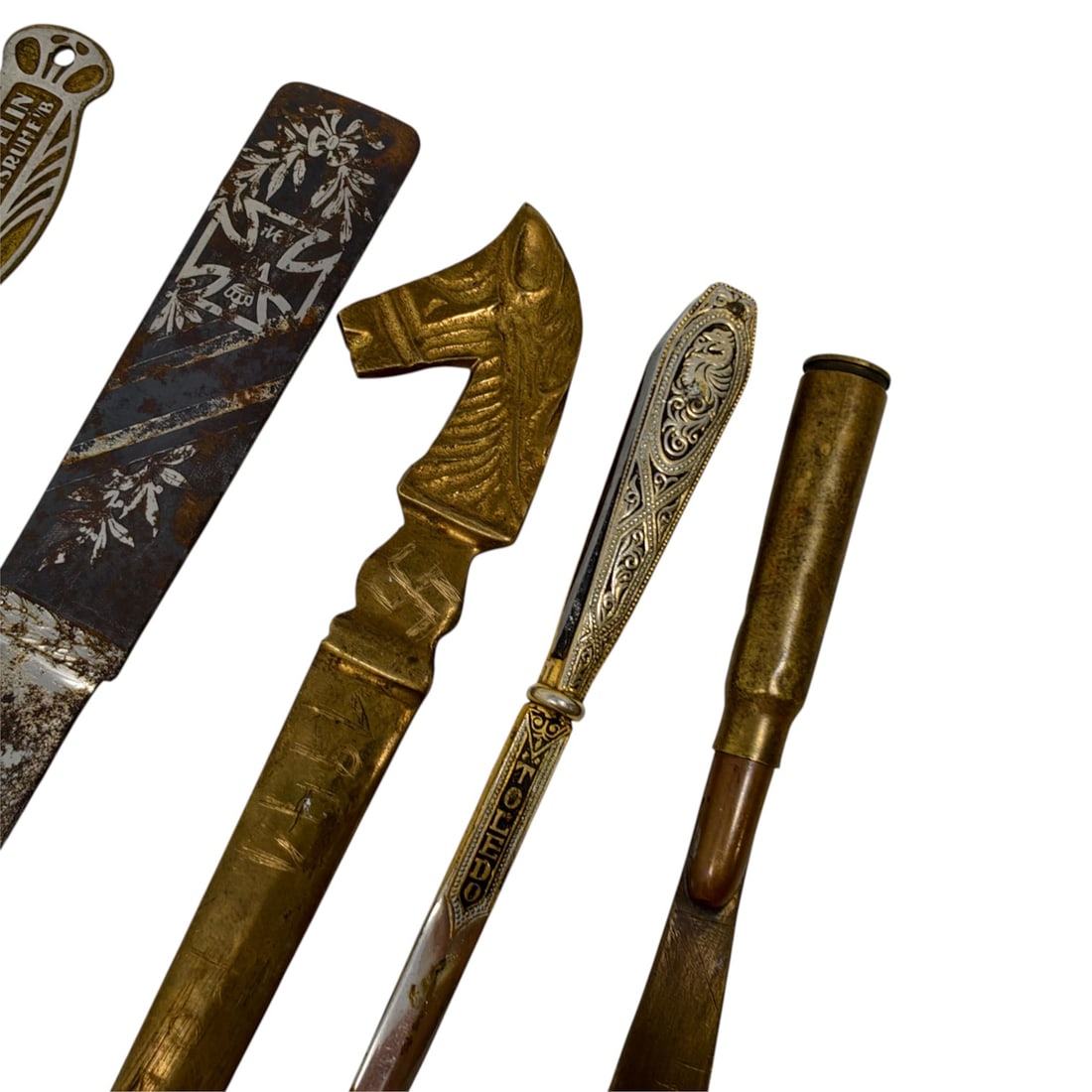
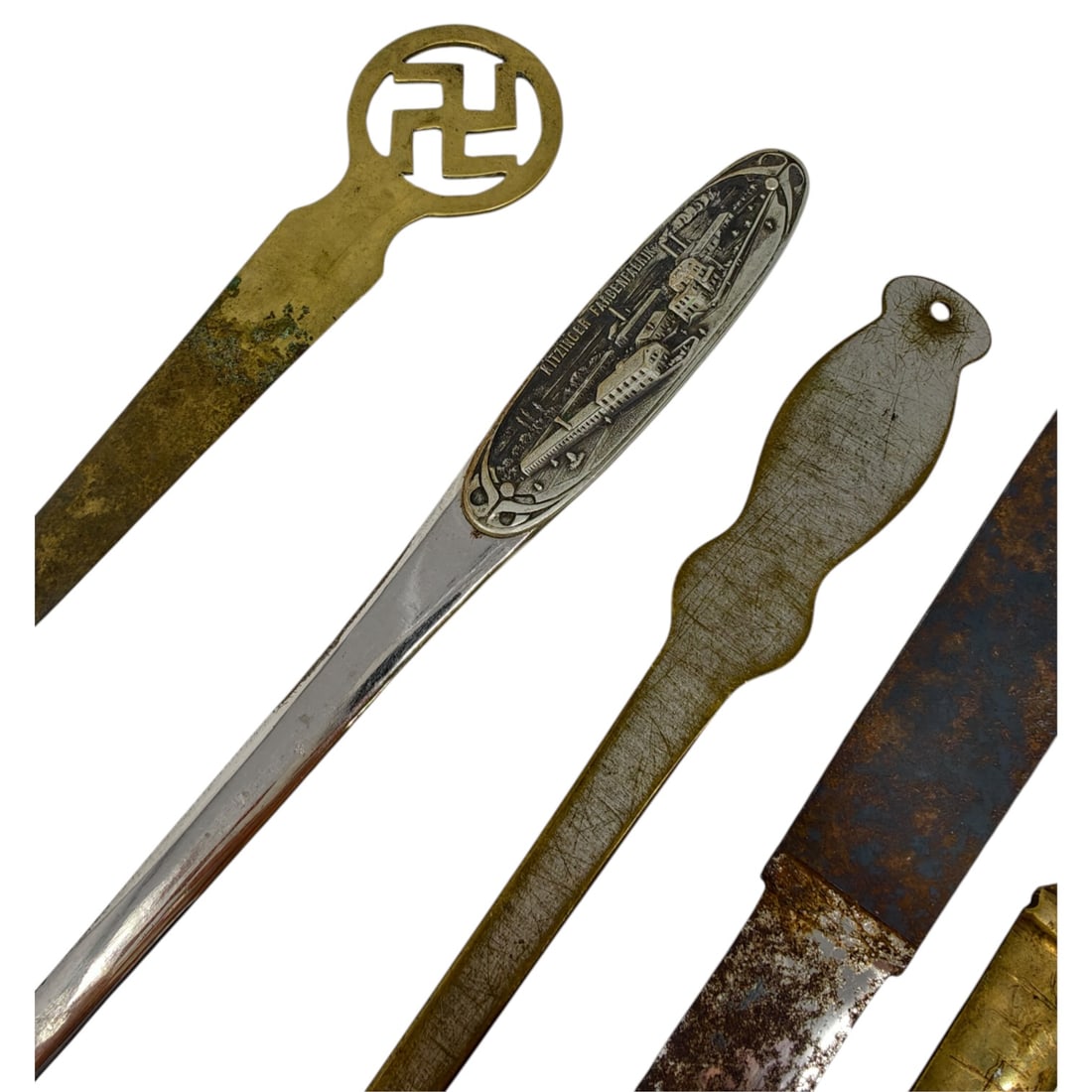
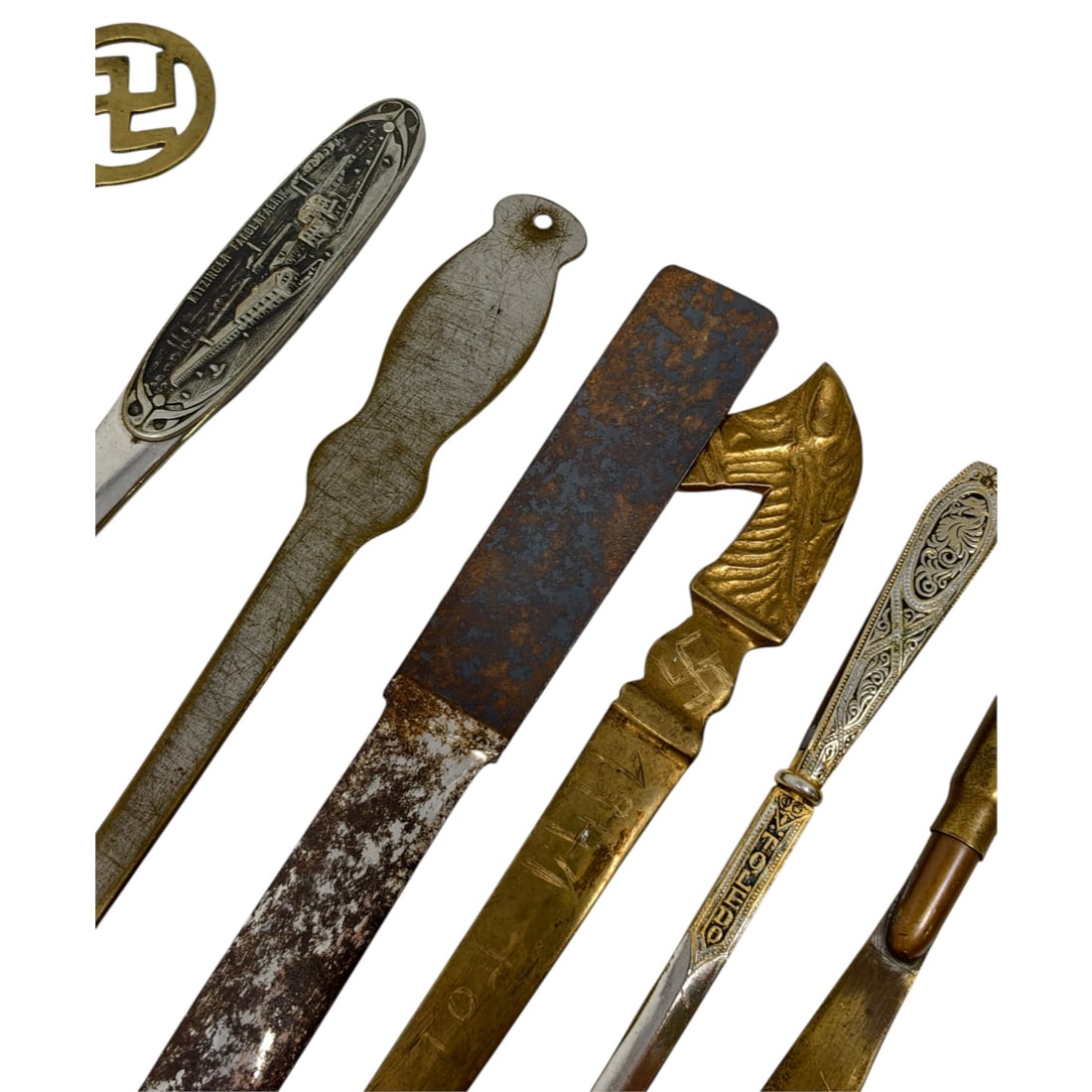
A set of decorative letter openers and small novelty blades in mixed metals including brass and nickel-plated alloys. One is formed with a solid ring pierced with a mobile swastika motif at its terminus, a symbol used widely in Europe and Asia in decorative and souvenir wares before its adoption by the National Socialist movement; a further brass example carries an engraved swastika alongside stamped lettering. Several bear advertising or souvenir inscriptions, including "C.P. Flug, Kgl. Hoflieferant, Kiel, Kitzingen, Genua" and "Eugen Steffelin, Hofspediteur, Karlsruhe, " identifying them as promotional items distributed by continental firms. Others feature engraved floral and foliate decoration, a stylized bird or griffin-form grip, and a miniature dagger-form piece with a crossguard handle. The blades are of varying lengths and forms, some with pierced suspension holes suggesting use as watch-fob or desk novelties rather than weapons.
Souvenir and advertising letter openers of this type were widely produced in Germany and other parts of Europe from the late nineteenth century through the interwar period, often distributed by tradesmen, spa resorts, and shipping or transport firms as promotional giveaways. The swastika motif appears here in its pre-1933 decorative and commercial usage, common on European souvenir and luck-charm items of the era, predating and separate from its later political appropriation.
Firms such as C.P. Flug and Eugen Steffelin operated as tradesmen and forwarding agents (Hoflieferant and Hofspediteur denoting appointment as suppliers to royal or ducal households) in Kiel and Karlsruhe respectively, using inexpensive branded novelties like these as customer giveaways to advertise their services. The swastika's presence on such pieces reflects its widespread use across turn-of-the-century Europe as a folk emblem of good fortune, found on jewellery, postcards, and trade tokens well before the symbol's appropriation by the NSDAP after 1920. Such promotional ephemera illustrates the commercial culture of the German Empire and Weimar-era trade networks rather than any political affiliation.
Sold in November 2026 Militaria and Political Auction. This lot is not available to buy. Ask us about similar pieces