Fall 2026 Militaria and Political Auction · Lot 366
Lodz Ghetto Ration Card for a Child, Estera Luba Strawczynska
- Price realized
- $50
- hammer, buyer's premium excluded · Fall 2026 Militaria and Political Auction
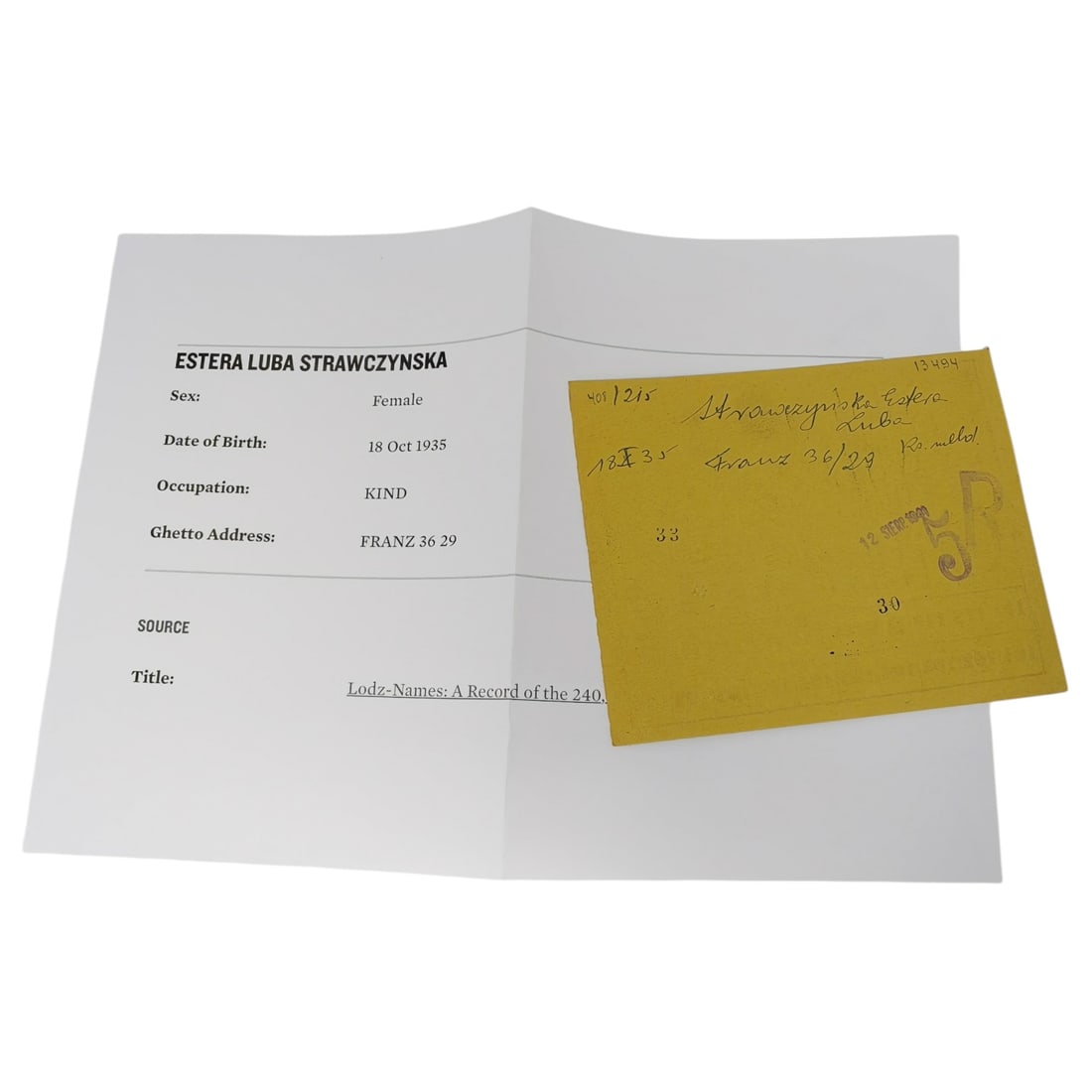
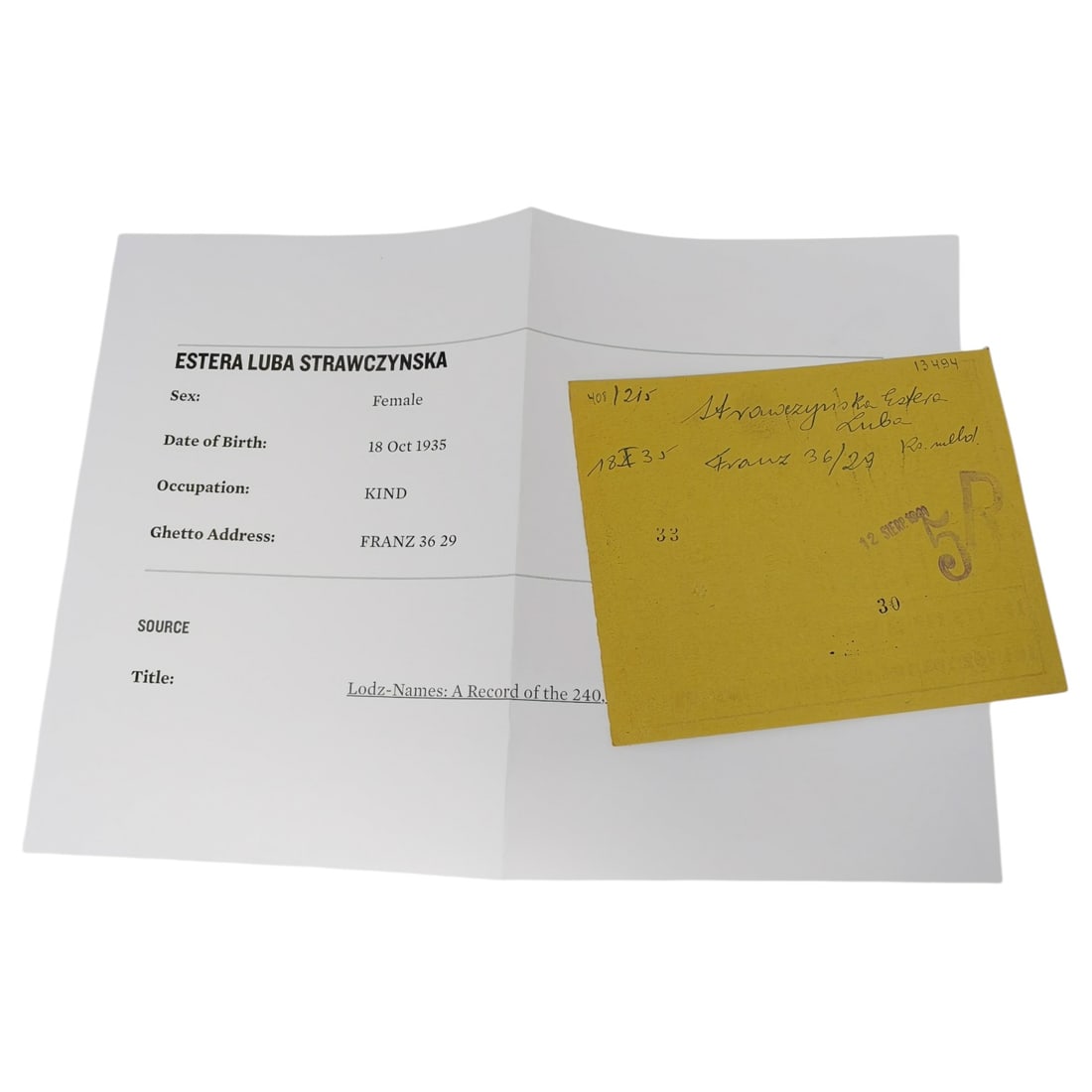
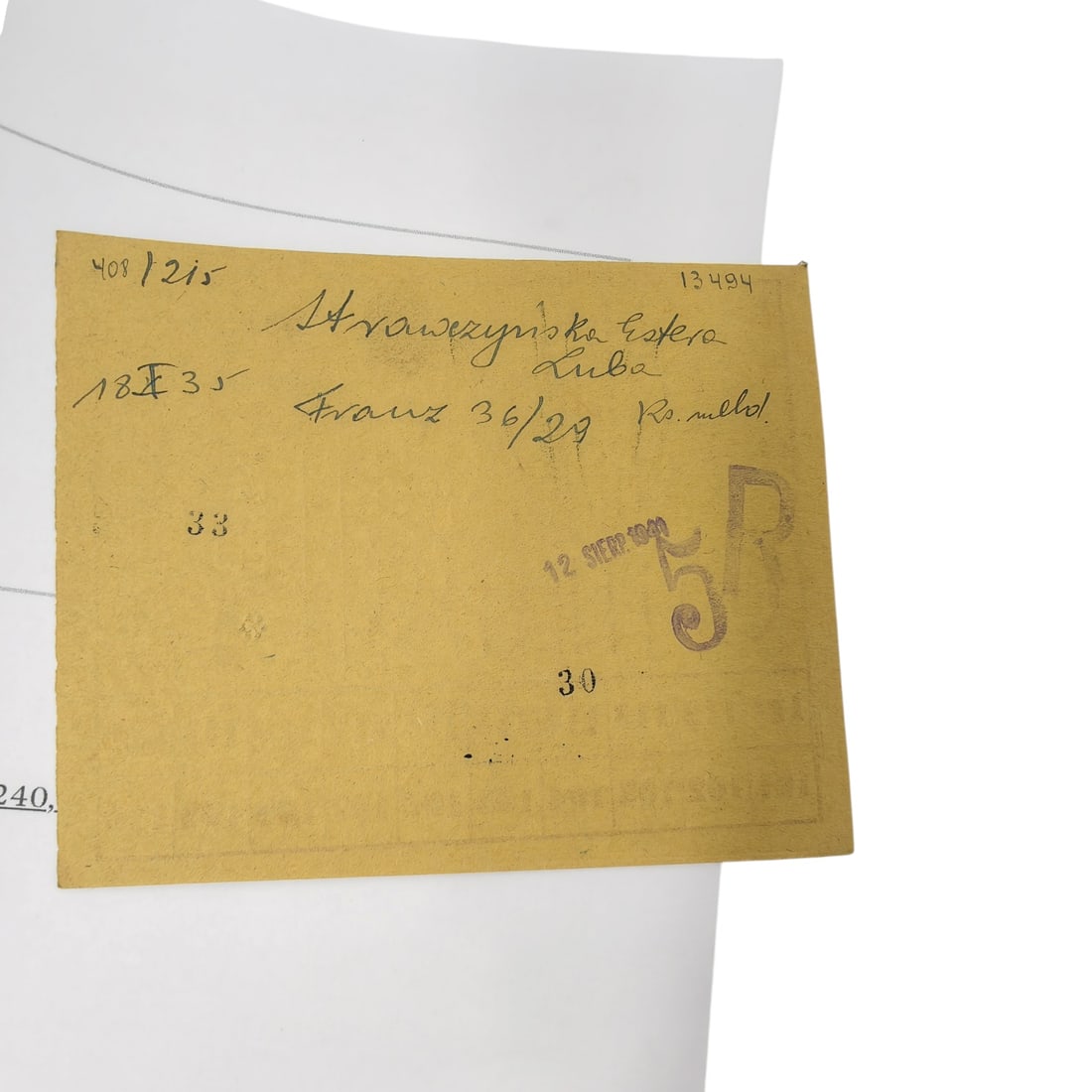
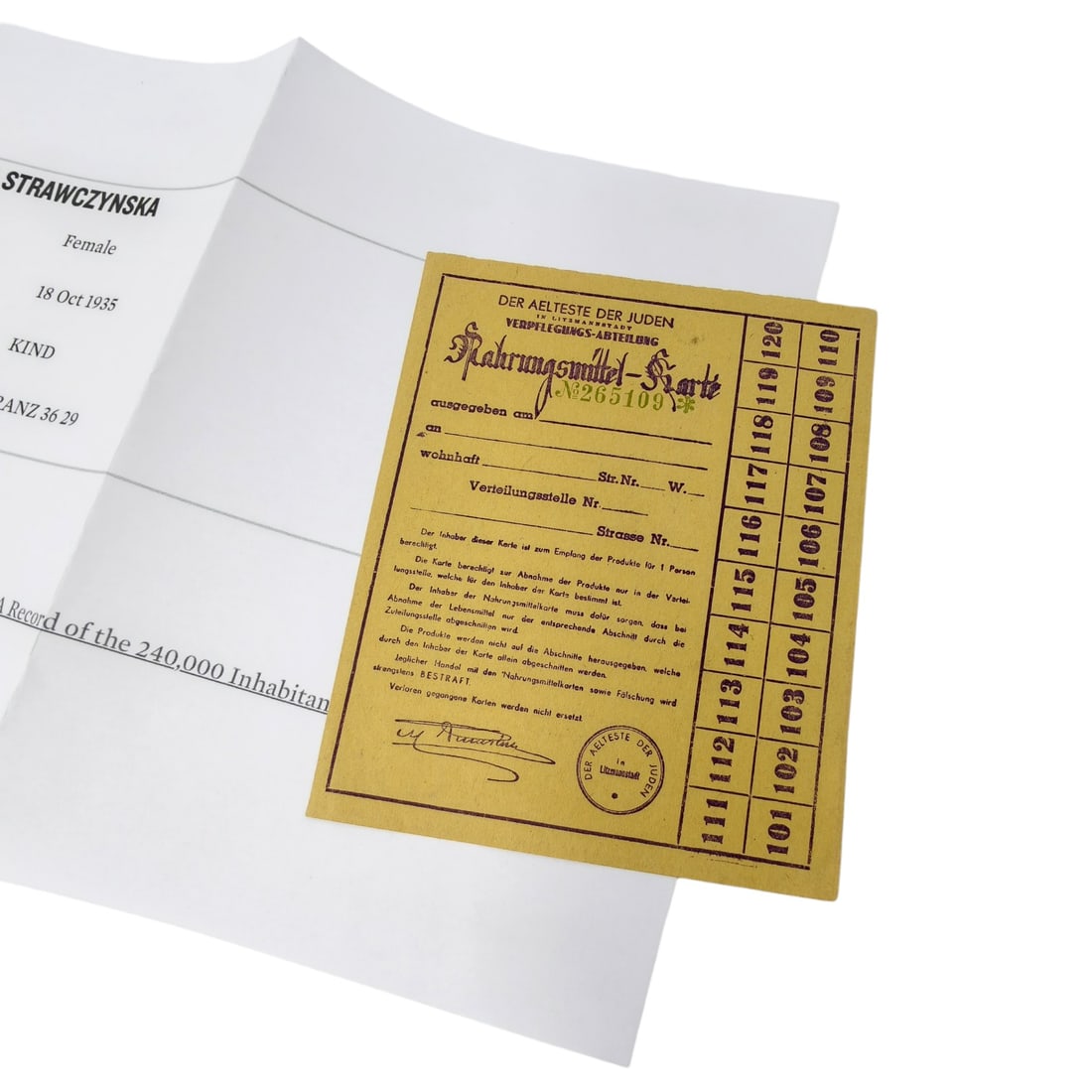
A ration card from the Lodz Ghetto administration, filled out in ink for Estera Luba Strawczynska, a female child born 18 October 1935, listed with the occupation "KIND" (child) and residing at Ghetto Address Franz 36/29. The card, in what appears to be a yellow/buff stock, bears a stamped date of 12 SIERP 1940 (12 August 1940) along with a "5 R" stamp and additional reference numbers (13494, 401/215) in pencil and ink. Accompanying the card is a printed research page identifying the individual by name, sex, date of birth, occupation, and ghetto address, citing the source as "Lodz-Names: A Record of the 240,000...", a published index of Lodz Ghetto residents. The Lodz Ghetto, established by German occupying authorities in the Polish city of ?ód? in early 1940, was one of the largest Jewish ghettos of the Second World War, ultimately holding over 200,000 people under a rigid bureaucratic registration system administered by the Jewish Council (Judenrat). Surviving individual registration cards such as this one document the identities, addresses, and occupations of ghetto inhabitants and form part of the historical record used by researchers and memorial institutions to reconstruct the biographies of those held within the ghetto. The Lodz Ghetto, sealed in the Polish city of ?ód? (renamed Litzmannstadt by the occupying Germans) in 1940, was governed internally by a Jewish Council under Chaim Rumkowski, which administered rationing, labour, and housing for a population that exceeded 200,000 at its height. Ration cards such as this one were essential to survival, entitling holders to meagre allotments of food controlled through the ghetto's bureaucratic apparatus, and their surviving details, name, birth date, occupation, and address, allow researchers to trace individual fates within the ghetto. Most of the ghetto's inhabitants were deported to the Che?mno and Auschwitz-Birkenau extermination camps between 1942 and 1944, and such documents now serve as primary evidence in reconstructing the identities and circumstances of those who perished.
Sold in Fall 2026 Militaria and Political Auction. This lot is not available to buy. Ask us about similar pieces