Fall 2026 Militaria and Political Auction · Lot 247
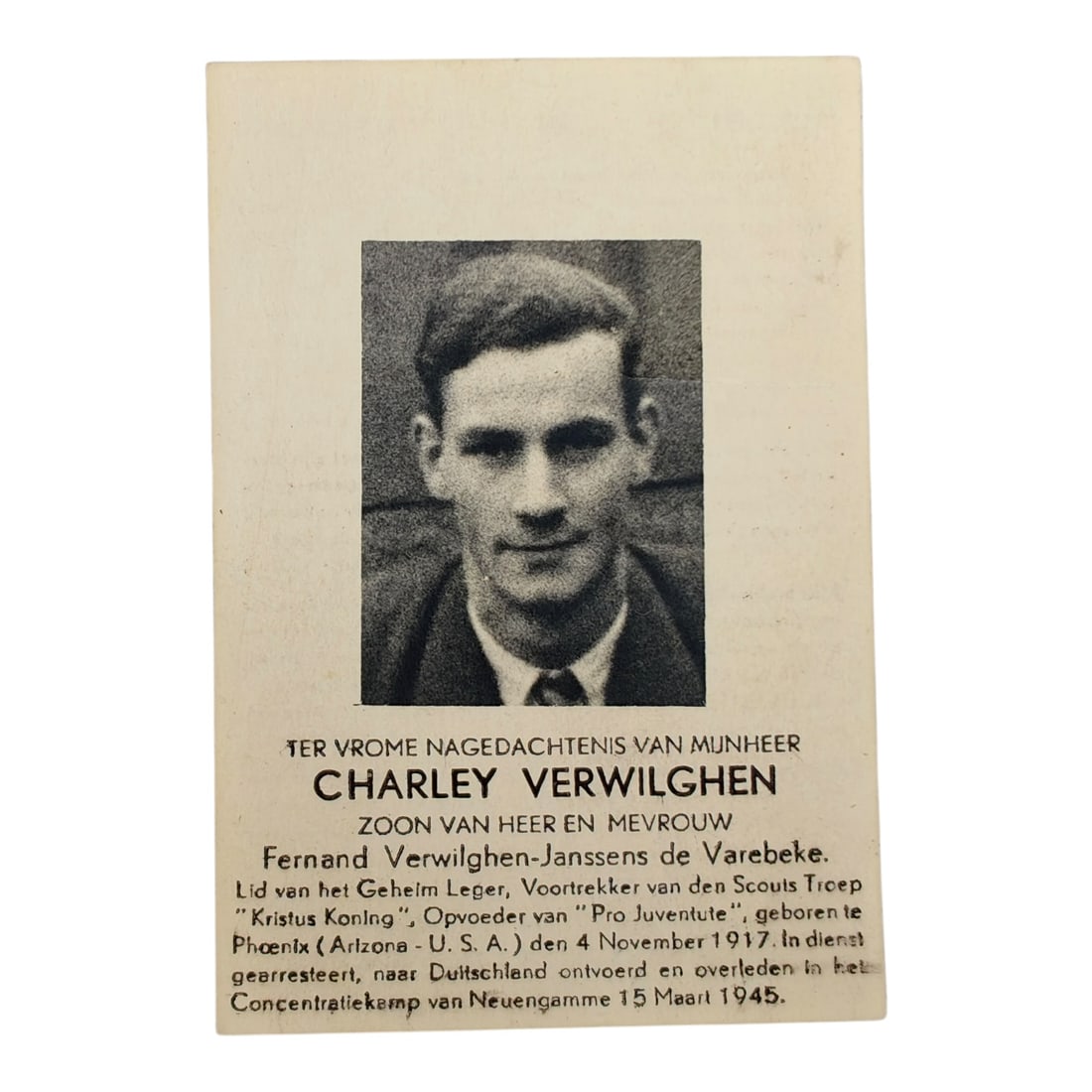
Concentration Camp Victim "Death Card" of American Citizen
- Price realized
- $70
- hammer, buyer's premium excluded · Fall 2026 Militaria and Political Auction
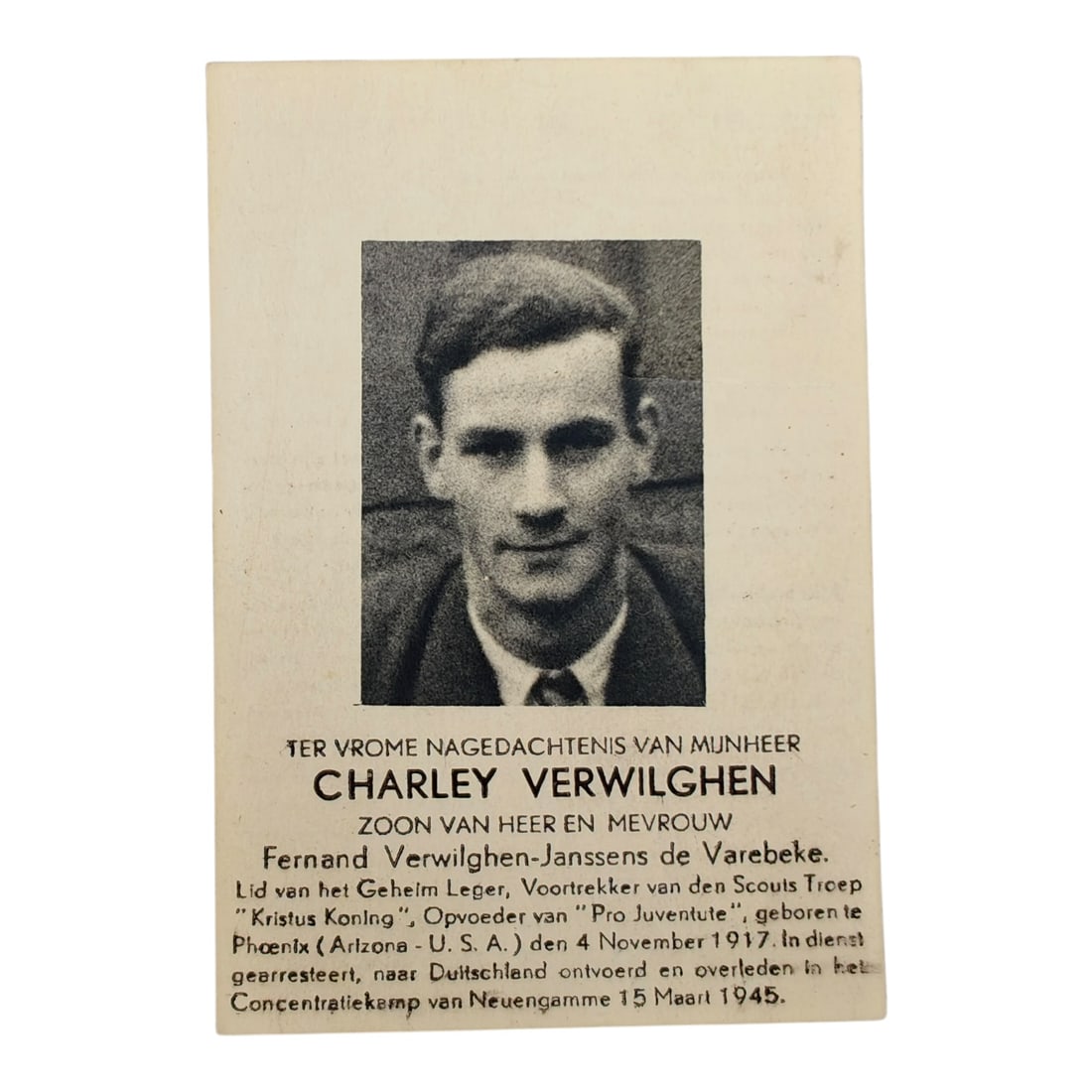
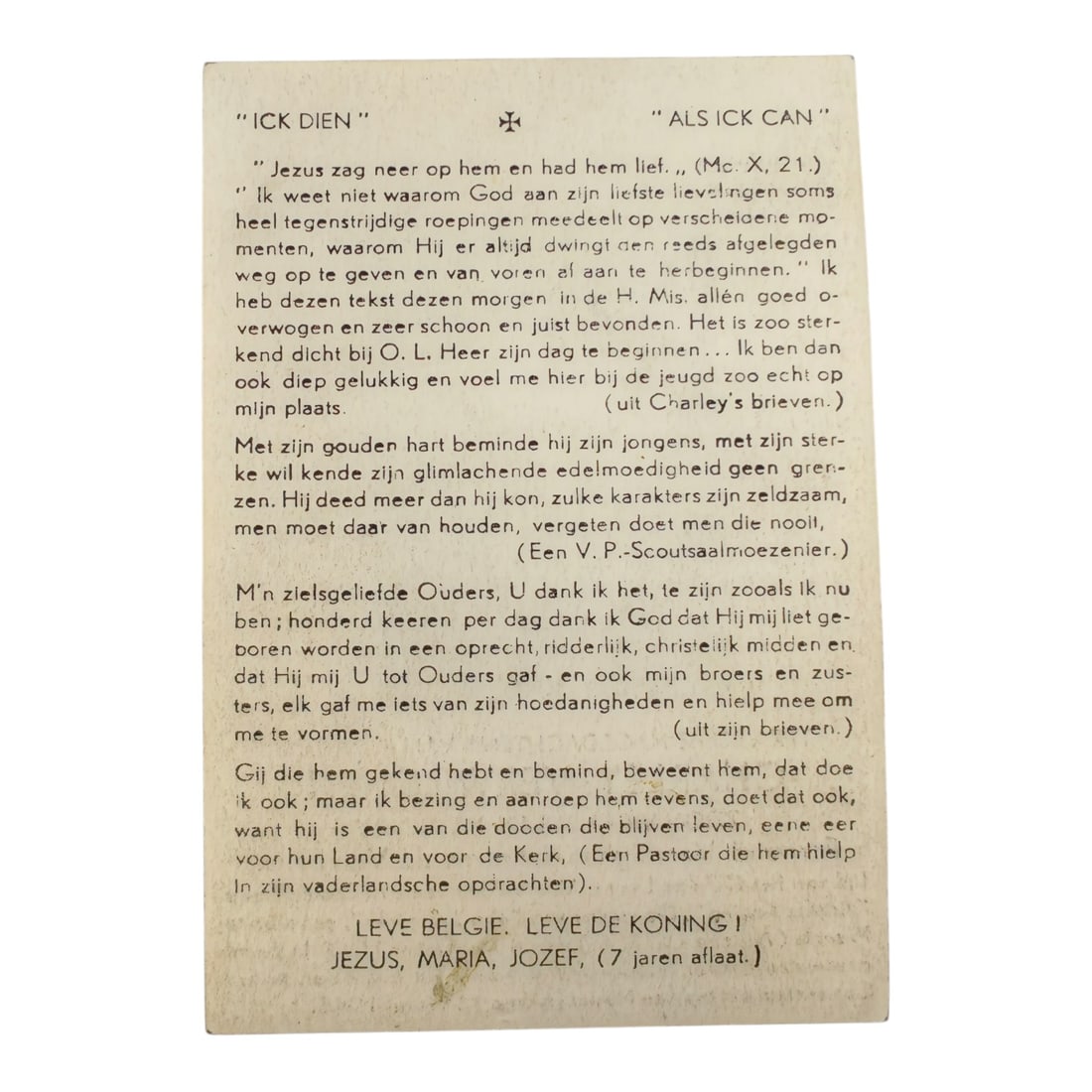
Belgian WWII Memorial Card for Charley Verwilghen This bidprentje, or memorial card, commemorates Charley Verwilghen, a Belgian-American born in Phoenix, Arizona on November 4, 1917, who was active in the Geheim Leger (Belgian Secret Army resistance movement), served as a Voortrekker leader in the "Kristus Koning" Scout troop, and worked as an educator for the "Pro Juventute" youth organization. The card records his arrest, deportation to Germany, and death at the Neuengamme concentration camp on March 15, 1945. The front carries his photographic portrait and biographical text in Dutch; the reverse is printed with the Scout mottos "Ick Dien" and "Als Ick Can, " devotional reflections, excerpts from his personal letters, and a tribute from a Scout chaplain, closing with the patriotic phrase "Leve Belgie. Leve de Koning!" Such memorial cards were a common Belgian and Dutch Catholic funerary tradition, distributed to family and community after a death. This example documents one of the many Belgian resistance members and Scout leaders swept up in Nazi deportations, offering a personal and organizational record of a victim of the Neuengamme camp system in the closing months of the Second World War. The Geheim Leger (Secret Army) was one of the principal Belgian resistance organisations formed after the 1940 occupation, drawing heavily on former military personnel and Catholic youth networks such as the Scouting movement and "Pro Juventute" to sustain intelligence-gathering, escape lines, and sabotage against the German administration. Members caught by the Gestapo or collaborationist police were typically processed through transit camps such as Breendonk before deportation to concentration camps in the Reich under the Nacht und Nebel or general political prisoner categories. Neuengamme, near Hamburg, held tens of thousands of such prisoners under conditions of forced labour that produced extremely high mortality, particularly in the war's final winter as supply lines collapsed and evacuations began. Memorial cards of this kind, produced by families and parish or Scout communities after liberation, served both as private mourning objects and as small public records honouring resistance members who did not survive deportation.
Sold in Fall 2026 Militaria and Political Auction. This lot is not available to buy. Ask us about similar pieces