Fall 2026 Militaria and Political Auction · Lot 1086
German Ahnenpaß Ancestry Passport with Nuremberg Apprenticeship Documents for Fritz Mohr / Robe
- Price realized
- $15
- hammer, buyer's premium excluded · Fall 2026 Militaria and Political Auction
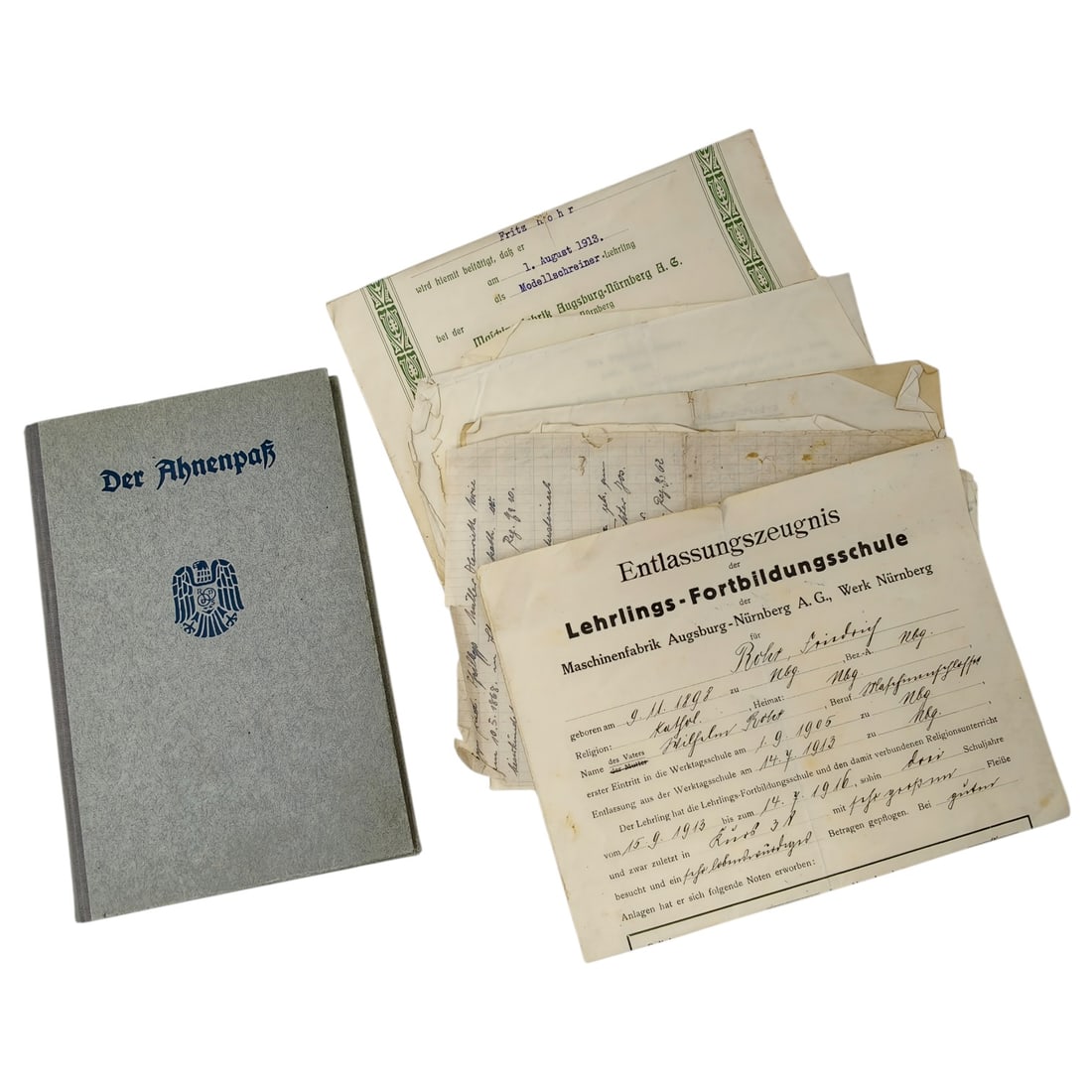
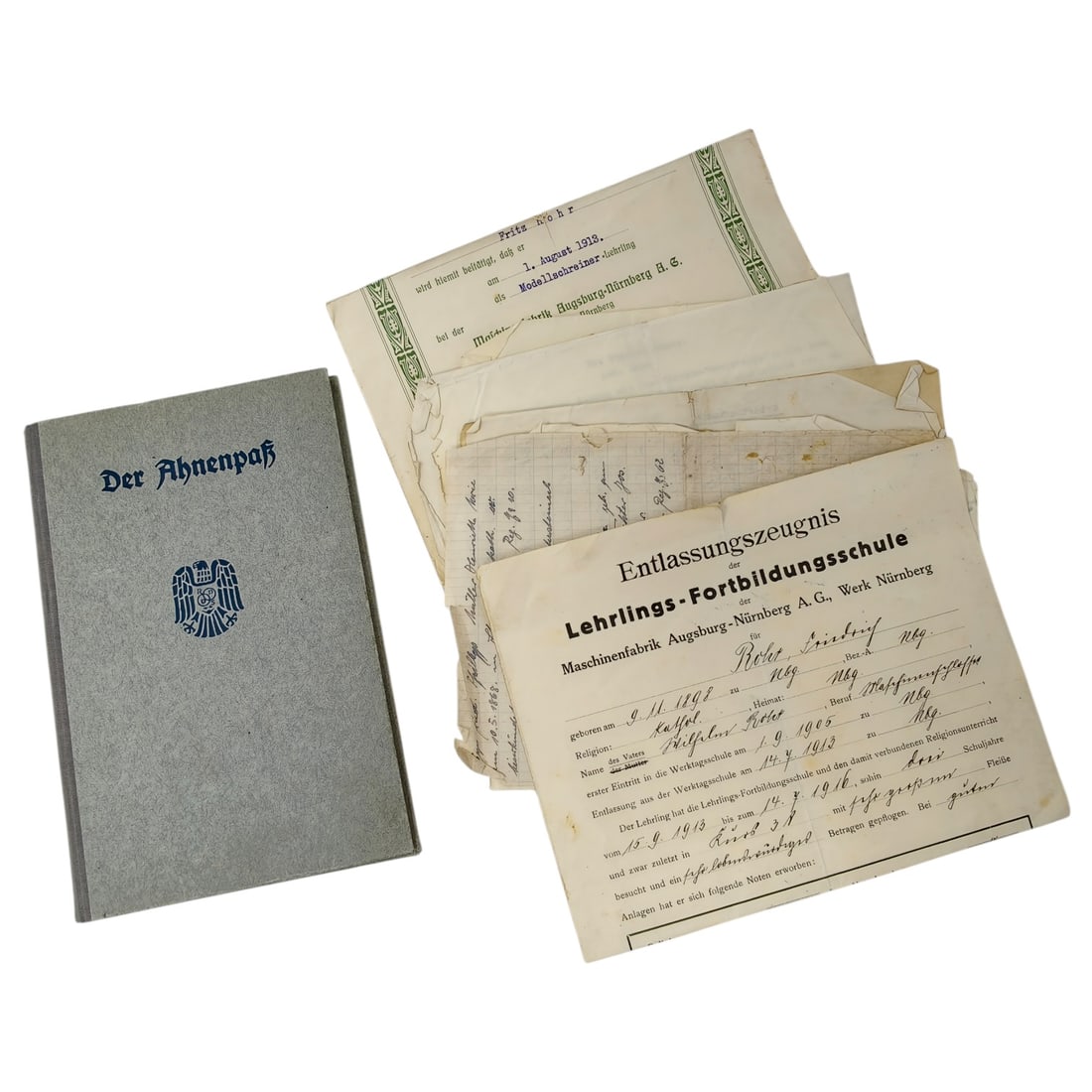
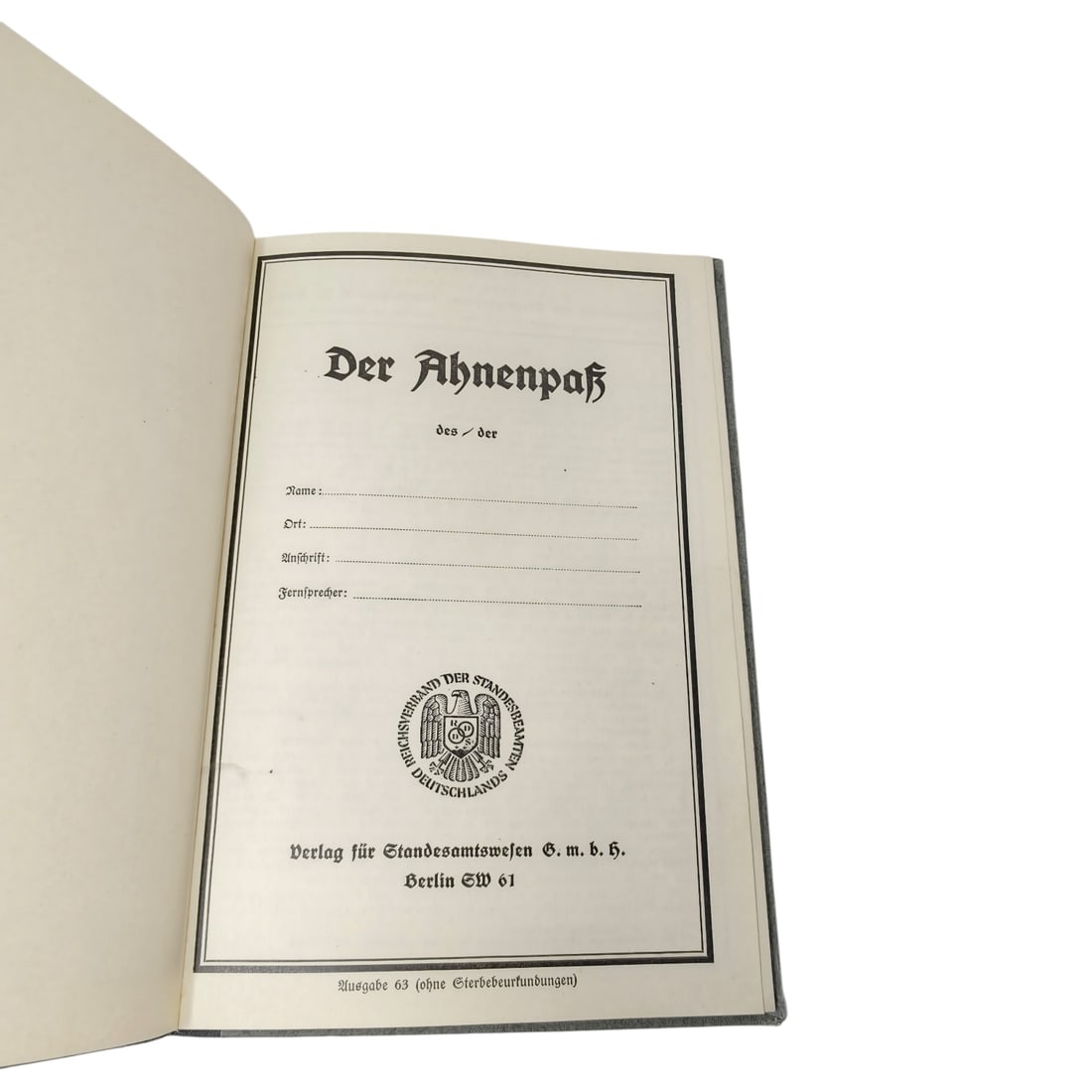
A grey-covered "Der Ahnenpaß" (ancestry passport) issued by Verlag für Standesamtswesen G.m.b.H., Berlin, blank on the interior name fields and bearing the Reichsverband der Standesbeamten Deutschlands eagle emblem on the title page. Accompanying the passport is a set of paper documents from Maschinenfabrik Augsburg-Nürnberg A.G. (M.A.N.), Werk Nürnberg, including a Modellehrzeugnis apprenticeship certificate naming Fritz Mohr dated 1. August 1918, and an Entlassungszeugnis (discharge/completion certificate) from the Lehrlings-Fortbildungsschule for an apprentice named Robert (surname appearing as Sindtke or similar), with handwritten entries recording birth details, religion, trade, and school attendance dates spanning 1913 to 1918. Several additional handwritten sheets and ruled pages are included among the set, apparently pertaining to the same apprenticeship records. The Ahnenpaß was a standardized genealogical record book widely used in Germany from the 1930s to document family lineage, often required for proof of Aryan descent under Third Reich racial policy. The accompanying M.A.N. Nuremberg apprenticeship papers, predating the passport, offer a separate documentary record of vocational training for young workers at the firm's Werk Nürnberg facility during the World War I era. The Ahnenpaß exemplifies the genealogical documentation system institutionalised across Germany after 1933, when proof of Aryan descent across several generations became a bureaucratic prerequisite for civil service employment, party membership, and other rights under Nazi racial law, with the Reichsverband der Standesbeamten (Reich Association of Registrars) overseeing standardised civil registration practice. The M.A.N. Nuremberg apprenticeship certificates, by contrast, document the vocational training pipeline at one of Germany's major industrial concerns during the First World War, when firms such as Maschinenfabrik Augsburg-Nürnberg relied on structured apprenticeship schools (Lehrlings-Fortbildungsschule) to supply skilled labour for machine manufacturing amid wartime production demands.
Sold in Fall 2026 Militaria and Political Auction. This lot is not available to buy. Ask us about similar pieces