Fall 2026 Militaria and Political Auction · Lot 1030
Imperial German WWI Wound Badge in Black
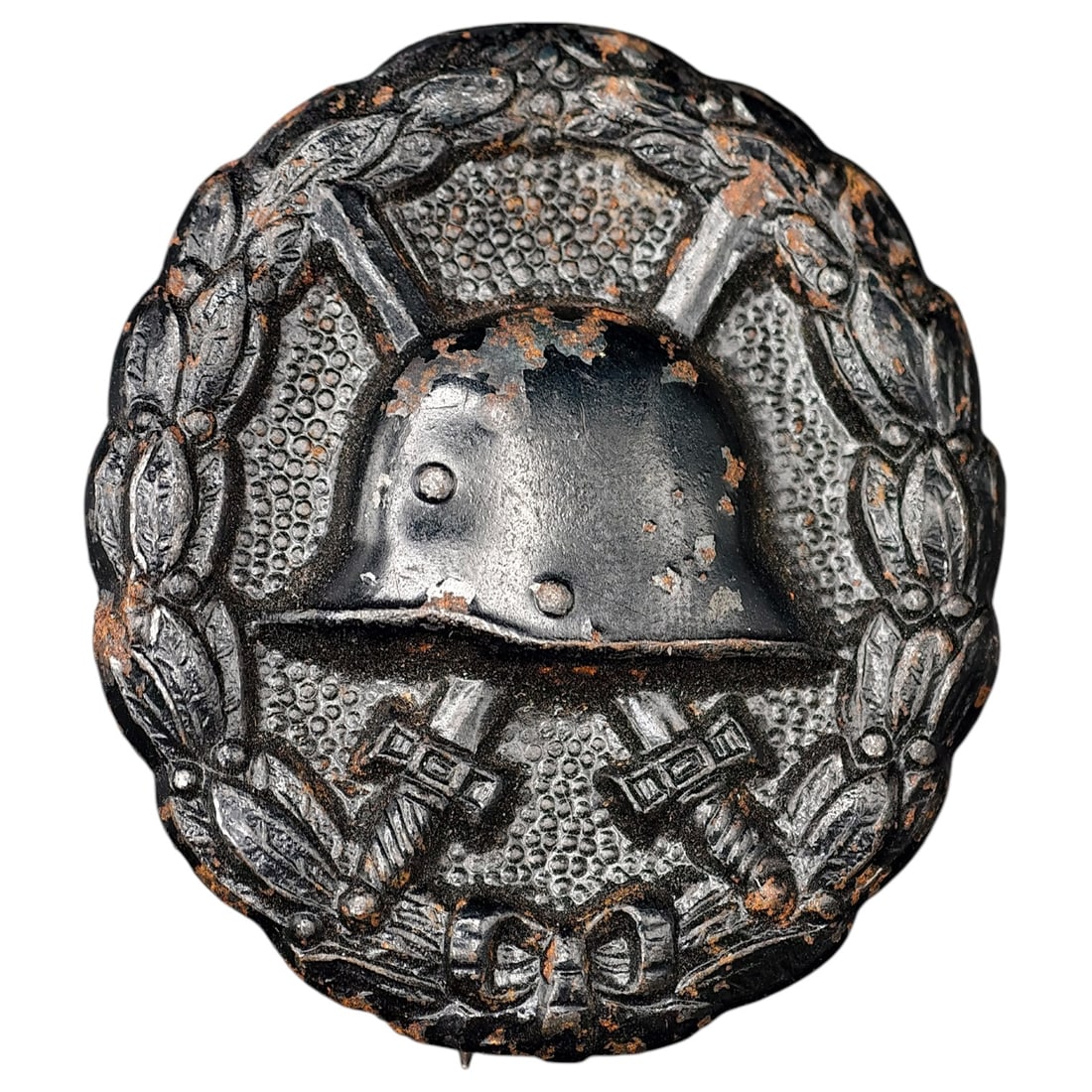
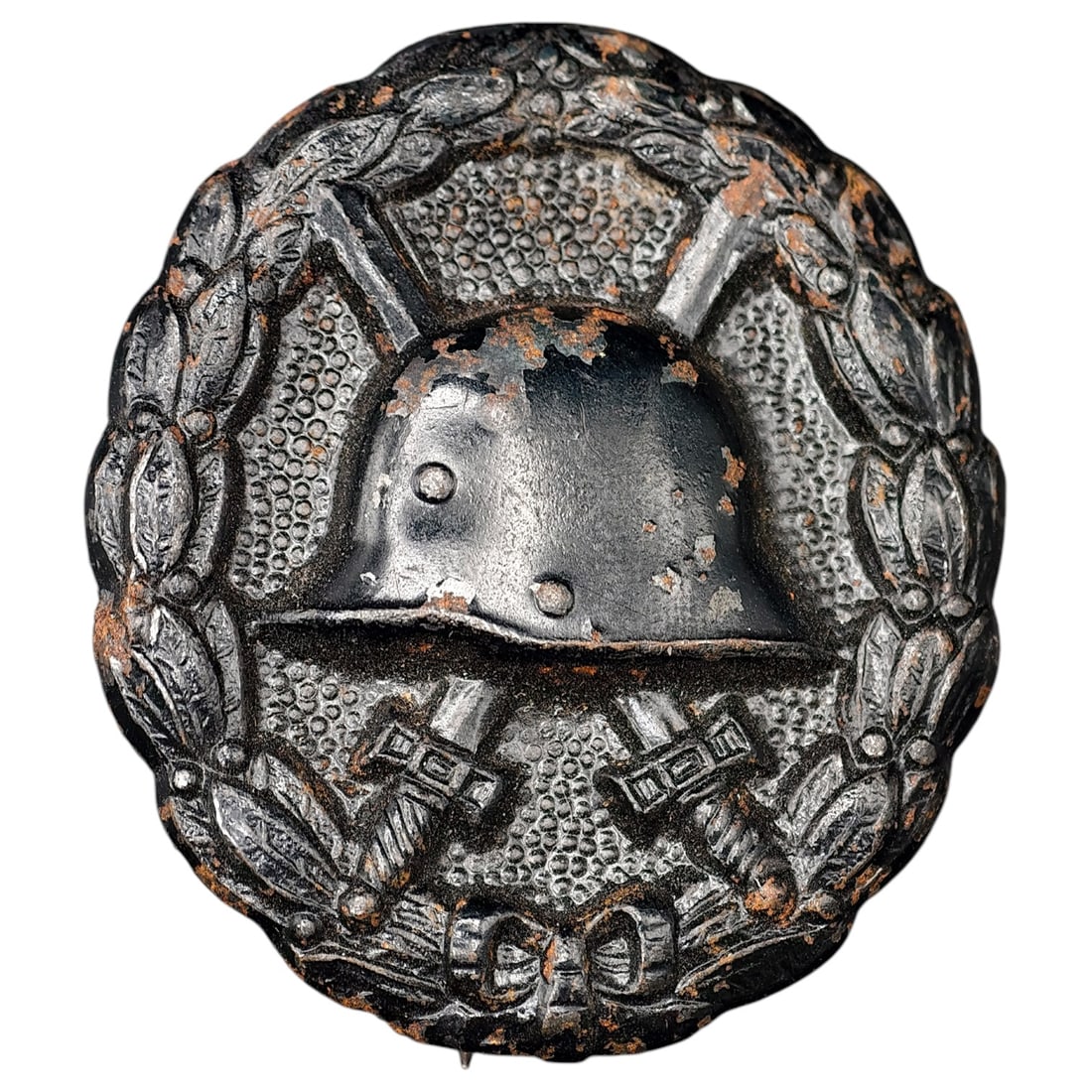
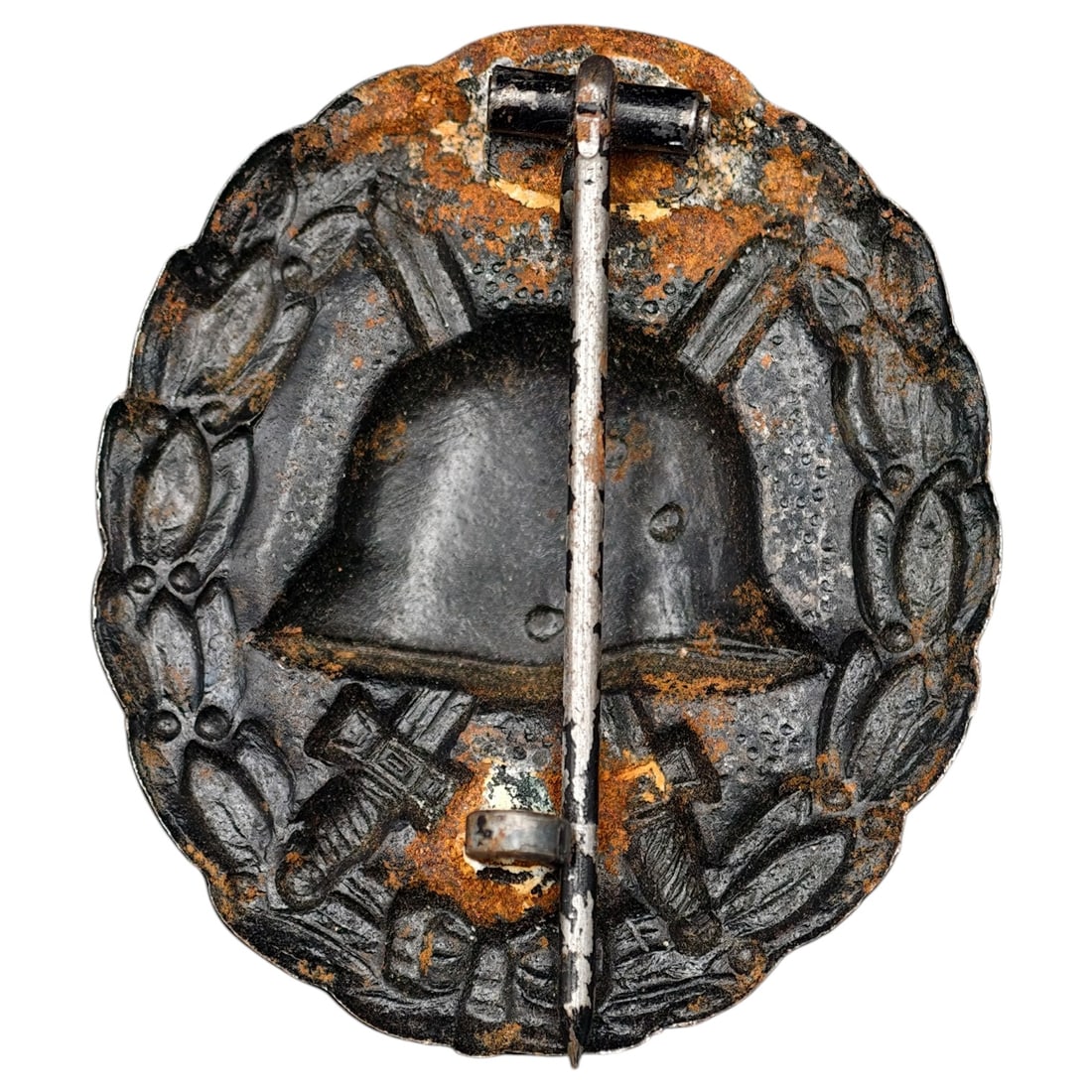
A German Wound Badge (Verwundetenabzeichen) of the black grade, issued to soldiers wounded in combat during the First World War. The badge depicts a Stahlhelm helmet over crossed swords, surrounded by a laurel wreath, with a stippled background pattern typical of the design. The badge is struck in a lightweight metal, consistent with the black class of this award, denoting one or two wounds. Instituted in 1918 by Kaiser Wilhelm II, the Wound Badge was Germany's first standardized decoration for combat wounds, awarded in three grades - black, silver, and gold - according to the severity or number of wounds sustained. It became one of the most widely issued Imperial German awards of the war and was worn on the uniform tunic. The Wound Badge was instituted in May 1918, largely on the initiative of Field Marshal Hindenburg, drawing on the model of Austro-Hungarian wound decorations already in use, and it marked the first time Imperial Germany created a standardised award specifically to recognise combat wounds rather than acts of bravery. The black grade, the lowest of the three classes, was granted to those wounded once or twice, while silver and gold marked greater numbers of wounds or more severe disablement. Coming so late in the war, most black-grade badges were awarded in the final months of fighting or retrospectively after the Armistice, making them a common but historically significant marker of frontline service in the closing phase of the First World War.
Catalogued for Fall 2026 Militaria and Political Auction. This lot is not for sale on this site. Ask us about similar pieces